
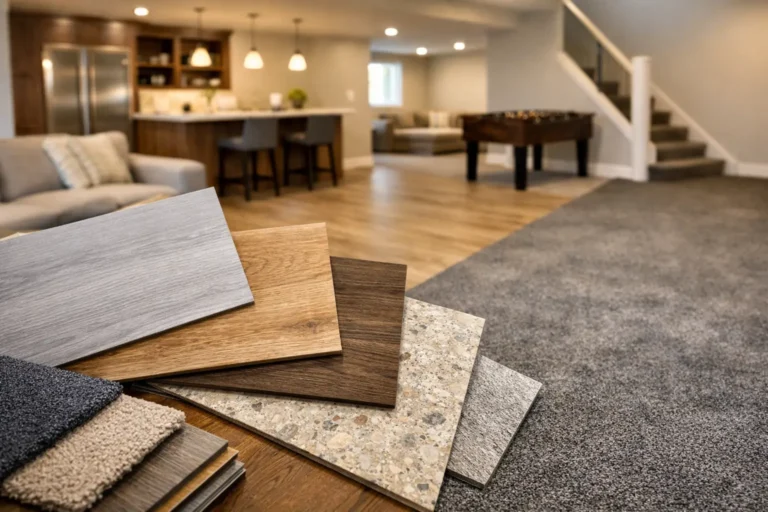
A finished basement can become the most flexible room in the house – a family hangout, home office, guest suite, gym, or playroom. But choosing the best basement flooring materials takes more thought than choosing a floor upstairs. Below grade, concrete slabs can feel cold, hold moisture, and create problems for materials that would perform well in a bedroom or living room.
The right choice is not always the most expensive one. It is the material that fits your basement’s moisture conditions, how your family will use the room, and the level of comfort you expect every day. A floor that looks great but cannot handle a small leak or damp concrete can turn a smart renovation into an avoidable repair.
Start With the Basement, Not the Floor Sample
Before comparing colors, plank widths, or tile patterns, assess the space itself. Basements are more likely to experience moisture vapor moving through the concrete, minor water intrusion around foundation walls, condensation, and seasonal humidity changes. Even a basement that has never flooded may not be suitable for every flooring type.
A professional moisture assessment helps identify whether the slab needs sealing, leveling, crack repair, or a moisture barrier before flooring is installed. This preparation is not an extra step to skip when the budget is tight. It protects the flooring, improves comfort, and helps prevent odors, mold concerns, and premature failure.
Also think about the room’s purpose. A home gym needs a different surface than a cozy media room. A basement bathroom needs a floor that handles direct splashes, while a guest space may benefit most from warmth underfoot. The best material is usually the one that solves the practical needs first, then supports the design you want.
Best Basement Flooring Materials for Real-Life Use
Luxury Vinyl Plank and Luxury Vinyl Tile
Luxury vinyl plank, often called LVP, is one of the strongest all-around choices for a finished basement. It is water-resistant or waterproof depending on the product, comfortable compared with ceramic tile, and available in convincing wood and stone looks. It also works well across large open basement layouts, helping a family room, hallway, and home office feel connected.
For busy households, vinyl is easy to maintain. Spills, muddy shoes, pet accidents, and everyday messes can generally be cleaned with a damp mop and manufacturer-approved cleaner. A quality product with a durable wear layer holds up well in playrooms and entertainment spaces.
The trade-off is that vinyl still needs a flat, properly prepared subfloor. Uneven concrete can cause planks to separate, flex, or show imperfections over time. Lower-cost vinyl can also feel less substantial and may not deliver the same realistic finish or long-term performance as a higher-quality option. Material selection and installation quality both matter here.
Porcelain or Ceramic Tile
Tile is a dependable choice in basements where moisture resistance is the top priority. Porcelain tile, in particular, is dense, durable, and highly resistant to water. It is an excellent option for basement bathrooms, laundry areas, wet bars, entry points, and walkout basements where wet shoes and outdoor traffic are common.
Tile offers nearly unlimited design flexibility. Homeowners can choose large-format stone looks for a clean modern feel, patterned tile for personality, or wood-look porcelain for the appearance of hardwood without the same moisture risk. Properly installed tile can last for decades.
Its main drawback is comfort. Tile installed directly over concrete can feel cold and hard, especially during winter. Area rugs can help, but many homeowners prefer to include a heating system beneath the tile in areas where they spend a lot of time. That adds cost, but it can transform a basement bathroom or lounge area into a much more comfortable space.
Sealed Concrete and Decorative Concrete
If you prefer an industrial, modern, or minimalist look, the existing concrete slab may become the finished floor. Sealed concrete is practical, moisture-tolerant, and easy to clean. It can be polished for a refined appearance, stained for depth of color, or finished with decorative coatings that suit a contemporary basement renovation.
This option works especially well for home gyms, workshops, utility areas, and casual entertainment spaces. It also avoids adding much floor height, which can be helpful in a basement with limited ceiling clearance.
Concrete is not automatically a low-cost shortcut. Cracks, uneven areas, and moisture issues need to be addressed first. It can also feel hard and cool underfoot, so it is best for spaces where softness is not the highest priority. Strategic rugs and mats can add warmth without hiding the floor’s character.
Carpet Tile or Moisture-Resistant Carpet
Carpet remains appealing for homeowners who want a warm, quiet basement. It softens a media room, makes a playroom more comfortable, and reduces sound transfer in a space used for movies, music, or gaming. The key is choosing the right carpet system for below-grade conditions.
Carpet tile is often the more practical basement choice. Individual tiles can be replaced if one section is stained or damaged, which is useful for families with children, pets, or frequent guests. Look for products designed to resist moisture and use a basement-appropriate backing or underlayment.
Traditional broadloom carpet can work in a dry, well-managed basement, but it carries more risk if water enters the space. Once padding and carpet become saturated, drying them fully can be difficult. Carpet is best reserved for basements with a proven history of dryness and a reliable plan for managing humidity.
Engineered Hardwood With Careful Preparation
Engineered hardwood provides the warmth and natural character many homeowners want, and it is more dimensionally stable than solid hardwood. However, it is not the first choice for every basement. Moisture vapor, changing humidity, and direct water exposure can still damage wood products.
In a dry basement with proper slab preparation, vapor control, and a suitable subfloor system, engineered hardwood may be a beautiful option for a finished rec room or upscale guest suite. It is worth considering when matching the flooring style on the main level is a major design goal.
Solid hardwood is generally a poor fit below grade. Its tendency to expand, contract, cup, and warp makes it a higher-risk investment over concrete. If a wood look is important but moisture is uncertain, quality luxury vinyl or wood-look tile provides a safer path.
Do Not Overlook the Subfloor
The flooring surface gets the attention, but the layers below it determine how the finished basement feels and performs. A proper subfloor system can create separation between concrete and flooring, reduce cold transfer, manage minor moisture vapor, and improve the feel underfoot.
For vinyl, engineered wood, and carpet, the right underlayment or raised subfloor can make a noticeable difference in comfort. In some cases, it also provides room for insulation and helps correct minor unevenness. The appropriate system depends on ceiling height, slab condition, selected flooring, and the basement’s overall moisture profile.
This is where experienced renovation planning protects the budget. Installing a beautiful floor over an unprepared slab may look fine initially, then reveal its problems months later. Addressing the substrate before installation is more predictable than paying to remove and replace a failed floor.
How to Choose the Right Floor for Your Basement
For most family-friendly finished basements, luxury vinyl plank offers the best balance of style, comfort, durability, and moisture resistance. It is versatile enough for open-concept layouts and practical enough for active daily use. Tile is often the better choice in bathrooms, laundry areas, and spaces where water exposure is likely.
If comfort and sound control are the priorities, carpet tile can be a smart addition in a dry media room or play area. If you want a sleek, low-maintenance gym or workshop, sealed concrete deserves consideration. Engineered hardwood can work when the basement is carefully prepared and the design calls for real wood, but it requires more confidence in the space’s moisture control.
A good basement floor should support how your household actually lives. The right material will feel comfortable on a quiet morning, stand up to a busy weekend, and give you confidence that your finished space is built to last.
