
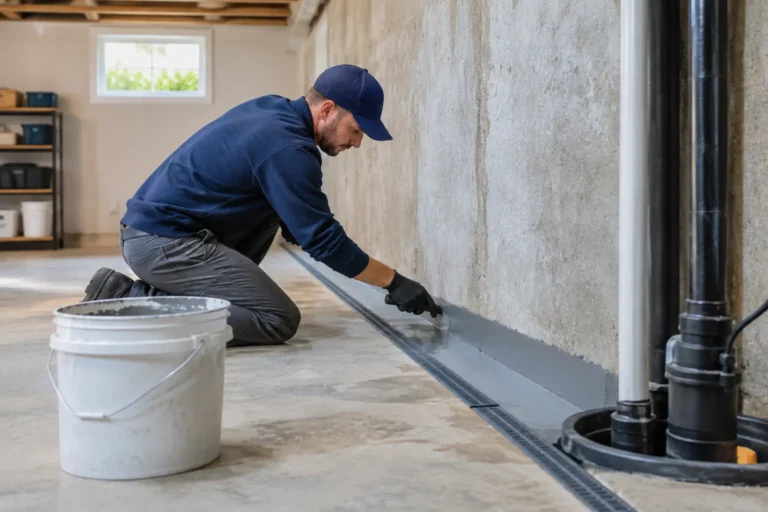
A basement can look clean, freshly painted, and completely usable while moisture is quietly working behind the walls. That is why this Burlington basement waterproofing guide starts before the renovation plan: identify where water is coming from, correct the cause, and only then invest in finishes you can trust.
For homeowners planning a family room, home office, gym, or rental-ready lower level, waterproofing is not a cosmetic upgrade. It is the groundwork that protects your comfort, indoor air quality, and renovation budget. A dry basement gives every finished detail – flooring, insulation, drywall, cabinetry, and lighting – a better chance to perform as intended.
Start by Reading the Signs
Water problems are not always dramatic. A puddle after a storm is an obvious warning, but many basements show subtler signs first. You may notice a musty odor, peeling paint near the bottom of a wall, white chalky residue on concrete, warped baseboards, rust on furnace components, or damp carpeting along an exterior wall.
Pay attention to timing. If moisture appears after heavy rain or spring thaw, the issue may be related to grading, gutters, downspouts, foundation cracks, or groundwater pressure. If dampness is steady throughout the year, condensation, plumbing leaks, or an improperly ventilated space may be contributing. A water stain directly below a bathroom, kitchen, or laundry area calls for a plumbing investigation before foundation work begins.
It also helps to distinguish between moisture on the surface and water entering through the structure. Condensation often forms when warm indoor air hits a cold foundation wall or pipe. It can sometimes be improved with ventilation, insulation, humidity control, and correcting air leaks. Water intrusion through cracks, joints, window wells, or the floor-wall seam needs a more durable repair plan.
What Causes Basement Water Problems in Burlington?
Burlington homes can face changing seasonal conditions, from snowmelt and freeze-thaw cycles to intense rainstorms. Soil around the foundation absorbs water, and when it becomes saturated, that water can push against basement walls and floors. This pressure can expose weaknesses that may have gone unnoticed for years.
Poor drainage at the surface is often a major factor. Soil should slope away from the home so rainwater does not collect against the foundation. Gutters must be clear and securely connected, while downspouts should discharge well away from the house. A short downspout that empties beside the foundation can send a surprising amount of water into the same area during a storm.
Foundation cracks deserve professional attention, but not every crack has the same meaning. Small vertical cracks may be manageable when properly sealed. Horizontal cracking, widening cracks, bowing walls, or doors and windows that suddenly stick may point to structural movement. Those conditions should be assessed promptly rather than covered during a basement renovation.
Older homes may also have aging drain tile, limited exterior drainage, or window wells that fill with water. The right solution depends on the home, the site, and the source of the moisture. Applying a single repair to every wet basement is rarely the responsible approach.
Burlington Basement Waterproofing Guide: Choosing the Right Repair
Waterproofing generally falls into two categories: exterior systems that stop water before it reaches the foundation, and interior systems that manage water after it enters the drainage area around the home. Both can be effective, but they serve different conditions and budgets.
Exterior waterproofing
Exterior waterproofing usually involves excavating around the foundation wall, repairing cracks, applying a waterproof membrane, and improving drainage at the footing. This approach addresses water at its source and can be an excellent long-term option when foundation walls are accessible and there is significant exterior water pressure.
The trade-off is cost and disruption. Excavation can affect landscaping, decks, walkways, porches, and other features near the home. It is often most practical when exterior drainage problems are clear, foundation repairs are needed, or a major landscape project is already planned.
Interior drainage and sump systems
An interior drainage system is designed to collect water at the base of the foundation and direct it to a sump pit, where a sump pump sends it safely away from the house. This option may be less disruptive than exterior excavation and can be a strong solution where groundwater pressure is persistent or access outside is limited.
A sump pump is only as reliable as its installation and discharge plan. It needs appropriate capacity, a properly routed outlet, and a backup strategy for power outages. In areas that experience heavy storms, a battery backup or secondary pump can provide valuable peace of mind. The goal is not simply to install equipment, but to make sure the system has a dependable path to move water away.
Crack injection and targeted repairs
For isolated, non-structural cracks, injection repairs can be a cost-effective option. Epoxy or polyurethane materials are placed within the crack to seal the water path. This can work well when the issue is localized, but it may not solve broader drainage problems around the foundation.
A targeted repair makes sense when the evidence supports it. If multiple areas are leaking, the floor-wall joint is wet, or water is coming through window wells, treating one visible crack alone may only postpone the next problem.
Fix the Outside Before Finishing the Inside
Even when a waterproofing system is needed, simple exterior maintenance should not be overlooked. These steps support any repair and can prevent minor moisture concerns from becoming expensive damage:
- Keep gutters free of leaves and debris so water flows properly.
- Extend downspouts away from the foundation and confirm they are not disconnected underground.
- Maintain grading so the soil slopes away from the home.
- Keep window wells clean, covered when appropriate, and properly drained.
- Avoid piling mulch, soil, or snow against basement walls.
These measures are not a substitute for a failed drainage system or significant foundation leak. They are practical first lines of defense that protect the work you have paid for.
Do Not Finish Over an Unresolved Moisture Problem
A finished basement adds valuable living space, but it also makes leaks harder and more costly to find. Installing laminate flooring, framed walls, insulation, and drywall before resolving moisture can trap dampness where you cannot see it. That can lead to mold growth, damaged materials, and a renovation that needs to be opened up and rebuilt.
Once the basement is dry, material selection still matters. Use moisture-resistant products where appropriate, especially near exterior walls and utility areas. Insulation should be selected and installed to reduce condensation risk, and finished walls should be planned with access to important plumbing, shutoffs, electrical components, and mechanical equipment.
Flooring choices deserve the same attention. Some products tolerate basement conditions better than others, and the condition of the concrete slab matters. If moisture testing shows elevated levels, the installation may need a vapor barrier, subfloor system, or a different finish material. The best-looking floor is not the best choice if it cannot perform in the space long term.
Questions to Ask Before Approving Waterproofing Work
A clear scope protects homeowners from guesswork. Before work begins, ask what evidence supports the recommended solution and whether the contractor has identified the water source. You should understand whether the proposal includes crack repair, drainage work, sump pump installation, discharge routing, restoration of excavated areas, and any required permits or inspections.
Ask how the work will affect your property and what is included once the repair is complete. If exterior excavation is involved, discuss access, protection for landscaping, and how walkways or other disturbed areas will be restored. If an interior system is proposed, ask where the sump will be located, how the pump will be serviced, and where discharged water will go.
A dependable contractor should be comfortable explaining the trade-offs. The lowest price can be appealing, but a repair that does not address the actual cause is rarely a savings. Detailed planning, appropriate materials, and careful installation are what turn waterproofing from a temporary patch into a lasting part of your home’s protection.
Plan Your Basement Renovation With Confidence
Waterproofing should be part of the renovation conversation from the beginning, not an unexpected expense after demolition. At HB Renovations, we believe a finished basement should feel comfortable and dependable every day, with the details behind the walls considered as carefully as the details you see.
If you are noticing dampness, odors, stains, or recurring water after storms, pause before choosing finishes. Addressing the moisture now creates a stronger foundation for the space you want to build – and helps your basement stay a place your family can enjoy with confidence.
