
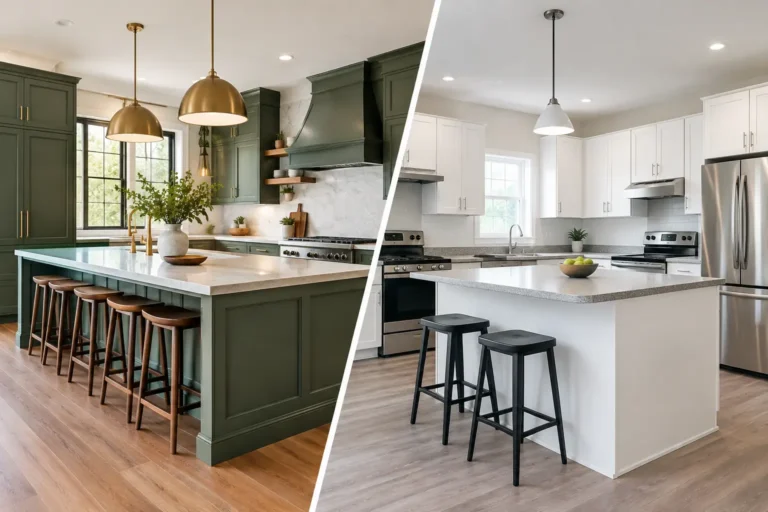
A kitchen can look beautiful in a showroom and still fall short at home. That is why the decision between custom kitchen versus prefab cabinets deserves more than a quick price comparison. Your cabinets affect how you cook, store groceries, move through the room, and feel about your home every day.
For homeowners planning a kitchen remodel, the right choice usually comes down to the space itself, your priorities, and where you want to invest. Prefab cabinets can offer a polished, practical result on a controlled budget. Custom cabinetry can solve awkward layouts and deliver a highly personal finish. Neither is automatically better. The best option is the one that supports your household, timeline, and long-term plans.
Custom Kitchen Versus Prefab Cabinets: The Core Difference
Prefab cabinets, often called stock or semi-custom cabinets, are manufactured in standard sizes and sold in a defined range of door styles, finishes, and configurations. Stock cabinets are ready-made with limited adjustment options. Semi-custom lines offer more flexibility, such as additional widths, finish choices, and storage accessories, while still working within a manufacturer’s established system.
Custom cabinets are designed and built for a specific kitchen. Cabinet dimensions, materials, door profiles, interior storage, and finish details can be tailored to the room and the way you use it. This does not always mean elaborate or traditional cabinetry. A custom kitchen can be clean, modern, simple, and highly functional. The difference is that the design begins with your home rather than a catalog of predetermined sizes.
That distinction matters most in older homes, homes with uneven walls, kitchens with unusual corners, or layouts where every inch needs to work harder.
When Prefab Cabinets Make the Most Sense
Prefab cabinets are a strong choice when your kitchen has a relatively straightforward footprint and you want to keep the project efficient. Standard cabinet sizes work well in many kitchens, especially when the design does not rely on filling every narrow gap or working around complicated structural conditions.
Budget is often the main advantage. Because prefab cabinets are produced at scale, their cost is generally lower than fully custom work. That can leave room in the renovation budget for durable countertops, better lighting, flooring, new appliances, or professional installation. A well-designed kitchen using quality semi-custom cabinets can feel far from basic.
Availability may also be helpful when timing matters. Some stock lines can be obtained quickly, though lead times still vary by supplier, finish, and current demand. Semi-custom products can take longer than stock, but they often arrive sooner than fully custom cabinetry.
Prefab does require some compromise. You may need filler panels beside walls, above cabinets, or around appliances to make standard sizes fit the room. In a thoughtful design, these details can look intentional. In a poorly planned layout, they can make the kitchen feel less refined and reduce valuable storage space.
Where Custom Cabinets Earn Their Cost
Custom cabinets are most valuable when standard options force too many compromises. If a kitchen has an odd ceiling line, a tight galley layout, a chimney bump-out, a window that interrupts upper cabinets, or walls that are noticeably out of square, custom work can create a cleaner and more usable result.
The practical benefits are often found inside the cabinets. You can specify drawer depths for pots and pans, create a pantry around the items your family actually buys, fit trays vertically near the oven, or add a charging drawer that keeps devices off the counter. A custom solution can also make a small kitchen feel more organized by eliminating wasted inches.
Finish quality and construction options can be another reason to choose custom. Homeowners may select specific wood species, paint colors, hardware, plywood construction, or detailed millwork that matches the character of the home. This level of control is especially useful when the kitchen connects to built-ins, a dining room, or an open-concept living space where visual continuity matters.
The trade-off is cost and lead time. Custom cabinetry involves design coordination, detailed fabrication, and skilled installation. Changes made after drawings are approved can also affect both the schedule and budget. It is an investment that works best when decisions are made carefully before production begins.
Cost Is More Than the Cabinet Quote
It is tempting to compare one cabinet price against another and call it a decision. A realistic kitchen budget needs to account for the complete scope: design, demolition, plumbing, electrical upgrades, drywall, flooring, countertops, backsplash, hardware, delivery, installation, and finishing details.
A lower-priced cabinet line can become less economical if the layout requires extensive modifications or if the installation is not handled precisely. On the other hand, selecting custom cabinets for a simple kitchen may not provide enough added value to justify the premium.
Ask for an itemized renovation proposal that makes the cabinet allowance, installation work, and related construction clear. This helps prevent surprises and lets you decide where customization will have the greatest impact. Sometimes the right answer is a balanced approach: semi-custom perimeter cabinets with a custom pantry, island, or built-in feature wall.
Fit, Storage, and Daily Use Matter Most
Before choosing cabinets, think about the moments that frustrate you in your current kitchen. Maybe the trash pullout is too far from the prep area. Maybe you lack drawer space, the pantry is difficult to reach, or several people cannot move comfortably around the island at once.
These everyday details should guide the cabinet plan more than a door style alone. A kitchen that photographs well but makes meal prep harder is not a successful renovation.
Custom cabinetry gives the most freedom to solve specific storage and workflow problems. But prefab cabinets can still support smart design when the plan is built around standard dimensions from the start. Deep drawers, pullout trash bins, roll-out shelves, corner organizers, and appliance garages may be available in many semi-custom collections.
A contractor should also review the room before cabinets are ordered. Measurements, appliance specifications, outlet placement, ventilation, and plumbing locations all influence cabinet sizing. In Hamilton-area homes, where kitchens can range from century-home layouts to newer open-concept plans, this early coordination is especially valuable.
Durability Depends on Construction and Installation
Custom does not automatically mean better built, and prefab does not automatically mean low quality. Look beyond the label and ask how the cabinets are constructed. Drawer box material, drawer glide quality, cabinet box thickness, back panels, hinges, finish durability, and warranty coverage all affect how cabinets perform over time.
Installation is equally important. Even excellent cabinets can look poor if they are not leveled, secured properly, and finished cleanly against walls, ceilings, and flooring. Doors and drawers must be adjusted carefully, and fillers or trim should look purposeful rather than like an afterthought.
For a busy household, durable hardware and functional drawer storage may deliver more value than an expensive decorative detail. Spend where hands and eyes interact with the kitchen every day.
How to Make the Right Choice for Your Renovation
Start by setting a realistic budget range and identifying your non-negotiables. If maximizing storage, matching an existing architectural style, or fitting a challenging layout is essential, custom cabinetry may be worth prioritizing. If you want a fresh, functional kitchen without stretching the budget, a quality prefab or semi-custom line may be the smarter fit.
It also helps to decide how long you expect to stay in the home. Homeowners planning to remain for many years may place greater value on tailored organization and premium materials. Those renovating before a future move may focus on a timeless layout, durable finishes, and broad buyer appeal.
A clear design process makes either route more successful. At HB Renovations, the goal is not to steer homeowners toward the most expensive option. It is to understand how the kitchen needs to function, explain the trade-offs clearly, and build a plan that respects the home and the budget.
The right cabinets should make your mornings easier, your gatherings more comfortable, and your kitchen feel like it was planned for the life you actually live. A careful conversation before ordering can protect both your investment and your peace of mind.
