
Cabinets can account for a large share of a kitchen renovation budget, but their value is about far more than appearance. They determine how comfortably you prep meals, where everyday items live, and whether the room still feels organized after a busy week. This guide to choosing kitchen cabinets will help you make decisions that fit your space, lifestyle, and long-term plans for your home.
The right cabinet choice is rarely the most expensive option or the one that looks best in a showroom. A well-planned cabinet package balances practical storage, durable construction, a finish you will enjoy living with, and a budget that leaves room for the rest of the renovation.
Start With How Your Kitchen Needs to Work
Before selecting a door style or paint color, look closely at how you use the kitchen. A household that cooks most nights has different needs than one that mainly uses the space for quick breakfasts, takeout, and entertaining. Think about what currently causes frustration: crowded counters, hard-to-reach pots, a lack of pantry space, or an island that does not support prep work.
Pay attention to the items you use every day. Drawers near the cooktop are often more useful than deep lower cabinets for utensils, spices, and cooking tools. A pull-out recycling center can keep cleanup contained. If small appliances are constantly on the counter, an appliance garage or a dedicated cabinet may be worth considering.
Storage should also support the people using the kitchen. Families may need accessible snack drawers, a large pantry, and a landing spot for lunch bags. A homeowner who loves baking may prioritize deep drawers for mixers and baking sheets. There is no universal “best” layout. Good cabinet planning follows the routines of the people who live there.
Choose a Cabinet Configuration Before the Finish
Cabinet style is the visible part of the decision, but configuration has the bigger effect on everyday function. Start with the overall footprint, including appliance locations, walkways, windows, and plumbing. A renovation professional can help identify whether moving a wall, widening an opening, or repositioning an appliance would create a more usable kitchen.
Base cabinets deserve special attention. Traditional cabinets with doors and fixed shelves can be cost-effective, but full-extension drawers offer easier access to heavy cookware and dry goods. You can see the entire contents without kneeling down or reaching into the back of a dark cabinet. They typically cost more, so a practical compromise is to use drawers in the highest-use zones and standard cabinets where they make sense.
Corner cabinets need a deliberate plan. A lazy Susan, blind-corner pull-out, or diagonal corner cabinet can all work, depending on the layout and budget. The key is avoiding a corner that becomes wasted space. Likewise, do not assume every upper cabinet needs to reach the ceiling. Tall cabinets provide extra storage and a finished look, but a shorter configuration may feel more open in a compact kitchen.
Plan Storage Around Zones
The most efficient kitchens group storage around tasks. Keep plates, glasses, and cutlery close to the dishwasher. Place pots, pans, and oils near the cooking area. Store food containers near the refrigerator or prep zone. This approach reduces unnecessary steps and makes unloading groceries or cleaning up much easier.
A pantry is especially valuable, but it does not need to be a walk-in room. A tall pull-out pantry, pantry cabinet with adjustable shelves, or a well-organized wall of cabinets can provide substantial storage. What matters is visibility and access. Deep shelves without pull-outs can hide food and create clutter quickly.
A Guide to Choosing Kitchen Cabinet Construction
Cabinet construction affects durability, installation quality, and cost. The terminology can feel technical, but a few details tell you a great deal about what you are buying.
Look for sturdy cabinet boxes made from furniture-grade plywood or high-quality engineered wood. Plywood is often preferred for its strength and resistance to moisture, particularly around sinks and dishwashers. Quality engineered panels can also perform well when properly manufactured and sealed. The best choice depends on the product line, the budget, and where the cabinets will be used.
Check how drawers are built and supported. Full-extension, soft-close drawer slides make it easier to access contents and reduce wear from slamming. Dovetail drawer construction is a traditional sign of quality, although strong modern joinery can also perform well. Cabinet doors should use durable hinges that allow for adjustment after installation. Small adjustments matter because cabinets can settle slightly once a home’s temperature and humidity change through the seasons.
Face-frame and frameless cabinets are both common. Face-frame cabinets have a frame around the front of the box and offer a classic, sturdy look. Frameless cabinets provide a more contemporary appearance with slightly greater interior access. Neither is automatically better. The right choice comes down to the desired style, storage needs, and the quality of the manufacturer’s construction.
Select Door Styles That Suit Your Home
Cabinet doors set the visual direction of the kitchen. Shaker doors remain popular because their clean lines work in traditional, transitional, and modern homes. Slab doors create a simpler, more contemporary look. Raised-panel doors bring more detail and may suit homes with a classic design style.
It is wise to choose a door style that feels connected to the rest of the house instead of chasing a short-lived trend. A kitchen renovation should feel current, but it should also remain comfortable and appealing years from now. If you enjoy a bold design, consider using it in lighting, hardware, or a feature area that is easier to update later.
Color also changes how a room feels. White or light cabinets can make a smaller kitchen feel brighter, while warm wood tones add character and depth. Dark cabinets can look striking in a large, well-lit space but may make a narrow kitchen feel heavier. Two-tone cabinetry, such as a darker island with lighter perimeter cabinets, can add contrast without overwhelming the room.
Think Carefully About Painted and Wood Finishes
Painted cabinets offer a wide range of colors and a polished appearance. They are a strong choice for homeowners who want a tailored, cohesive look. Over time, painted finishes may show wear at high-contact areas, especially around handles and corners. Quality preparation, finishing, and installation help minimize this concern.
Stained or natural wood cabinets highlight grain and variation, which can make everyday marks less noticeable. They work well in kitchens where warmth is a priority. Wood is not limited to traditional design, either. Rift-cut oak, walnut, and other clean-grain options can look refined and modern.
Set a Budget That Protects the Important Details
Cabinet pricing varies widely based on material, construction, customization, finish, and hardware. Stock cabinets are typically the most affordable and can be a good fit for straightforward layouts. Semi-custom cabinets offer more sizes, finishes, and storage options. Custom cabinets provide the greatest flexibility for unusual spaces, detailed design requirements, and highly specific storage needs.
The best value is not always the lowest initial price. Cabinets are fixed elements that are difficult and expensive to replace once countertops, backsplashes, and appliances are installed. It is often better to select a dependable cabinet line with durable hardware and a thoughtful layout than to spend heavily on decorative upgrades while compromising on function.
Leave room in the budget for the details that complete the installation. Fillers, panels, trim, crown molding, under-cabinet lighting, hardware, and interior organizers can affect both the final price and the finished appearance. Ask for a clear, itemized scope so you understand what is included before work begins.
Use Samples in Your Actual Kitchen
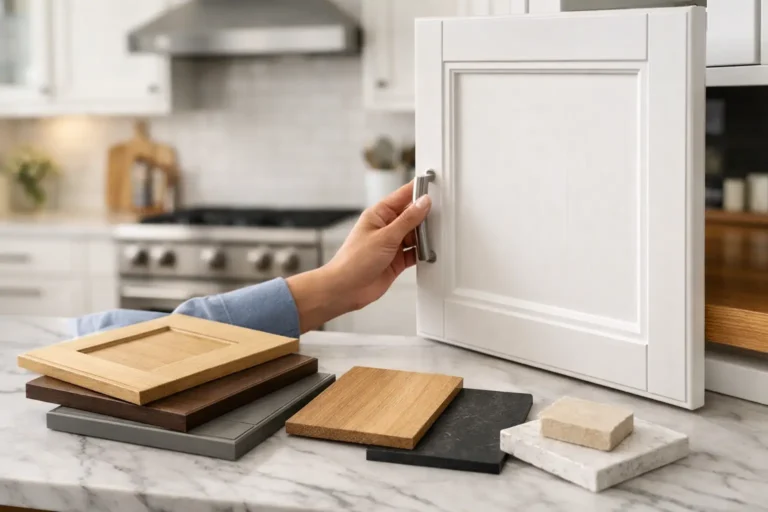
Showroom lighting can be misleading. Bring door samples home when possible and look at them beside your flooring, countertop options, wall color, and appliances. Check them in morning light, evening light, and under your planned kitchen lighting. A gray that looks soft in a showroom can appear blue in one home and warm in another.
Also consider maintenance honestly. Highly detailed doors collect more dust and grease than simple profiles. High-gloss finishes show fingerprints more readily than matte or wood-grain finishes. If your kitchen sees constant activity, easy-clean surfaces and practical hardware may matter more than a dramatic finish.
Choosing cabinets is a chance to build a kitchen around real life, not just a photo. When the layout is thoughtful and the materials suit your home, the finished space feels better every time you open a drawer, prepare a meal, or gather with the people you love.
