
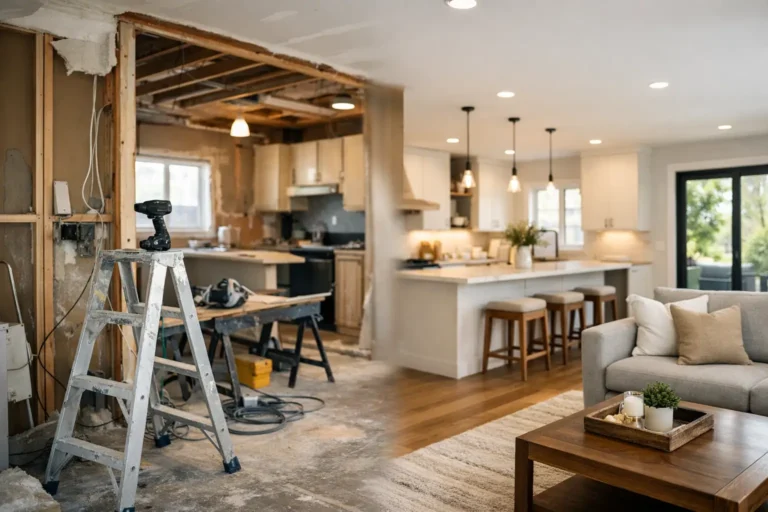
A whole-home renovation is not simply several room projects happening at once. It is a decision to rethink how your home supports your routines, your family, and the way you want to live for years to come. This guide to whole home remodeling will help you make informed choices before construction begins, so your investment delivers comfort, function, and lasting value.
For many homeowners, the goal is not to make every room look brand new. It is to solve the frustrations that have built up over time: a crowded kitchen, limited storage, an outdated bathroom, poor lighting, unfinished basement space, or a layout that no longer works for family life. A well-planned renovation brings those pieces together rather than treating them as separate problems.
Start With How You Want to Live
The most successful whole-home remodels begin with everyday life, not finishes. Before choosing cabinet colors or flooring, think through what is not working now and what needs to change. A family that cooks together may need a more open kitchen and better pantry storage. Someone working from home may need a quiet office with proper lighting and sound separation. Growing families often benefit from an additional bathroom, a finished basement, or more durable materials in high-traffic areas.
Walk through your home at different times of day. Notice where people gather, where clutter collects, and which areas are rarely used. These observations are more useful than a list of trends because they reveal the changes that will make a genuine difference.
It also helps to separate needs from wants. Replacing aging plumbing, improving insulation, correcting electrical limitations, and repairing moisture issues should take priority over cosmetic upgrades. Beautiful tile and new fixtures matter, but they should sit on a sound foundation.
Build a Clear Scope Before Requesting Prices
A vague plan produces vague pricing. If you ask contractors for a price to “renovate the house,” you are likely to receive estimates that are difficult to compare because each contractor may be assuming different materials, layouts, and levels of work.
Create a preliminary scope that identifies the rooms involved and the results you expect. For example, your kitchen scope may include removing a wall, relocating appliances, adding an island, upgrading lighting, installing custom cabinetry, and replacing flooring throughout the main level. Your bathroom scope may include a new layout, waterproofing, a walk-in shower, a vanity, ventilation, and tile.
You do not need to have every product selected before speaking with a renovation professional. In fact, experienced contractors can help you make smarter choices around layout, materials, and construction requirements. But you should be clear about your priorities. If maintaining the existing footprint matters more than adding square footage, say so. If a barrier-free shower is essential, make it part of the initial discussion.
Think in Systems, Not Rooms
Whole-home remodeling often creates opportunities to improve the systems behind the walls. Opening ceilings or removing finishes may reveal aging wiring, plumbing that needs attention, insufficient insulation, or ventilation issues. Addressing these items during renovation is usually less disruptive and more cost-effective than returning to them later.
This is especially true when several connected spaces are being remodeled. Updating the kitchen, main floor, and bathrooms together can allow for coordinated electrical work, plumbing changes, flooring transitions, and heating or cooling improvements. It may cost more upfront than a single-room project, but it can prevent repeated demolition and mismatched results down the road.
Set a Budget That Accounts for Real Decisions
Your renovation budget should include more than the visible finishes. Labor, permits, design planning, demolition, disposal, structural work, mechanical upgrades, fixtures, cabinetry, flooring, paint, and site protection all affect the final cost.
Set a realistic investment range early, then share it honestly with your contractor. A good renovation partner can explain what is achievable at that range and where trade-offs may be needed. You might choose to keep the kitchen layout in place to direct more funds toward high-quality cabinetry. Or you may decide that relocating plumbing is worthwhile because it creates a bathroom that functions better every day.
Keep a contingency amount for conditions that cannot be confirmed until work begins. Older homes can hide water damage, outdated wiring, uneven framing, or other issues behind walls and under floors. The exact amount depends on the age and condition of the home, as well as the scale of the renovation, but planning for the unexpected protects you from making rushed decisions later.
Avoid choosing a contractor based only on the lowest number. A lower estimate can reflect a narrower scope, lower allowances, missing preparation work, or assumptions that lead to expensive changes during construction. The goal is a clear, complete plan and a price that accurately reflects it.
Plan the Order of Work Carefully
Construction sequencing matters in a whole-home renovation. Work generally starts with planning, permits, and material selections, followed by demolition and any structural, plumbing, electrical, or HVAC changes. Insulation, drywall, flooring, cabinetry, tile, trim, paint, fixtures, and final details follow in an order that protects completed work.
The right sequence depends on your home and project. If the same flooring will run through several rooms, it is often best to coordinate that installation as one phase. If you are changing a kitchen layout, appliance orders and cabinet lead times need to be confirmed before demolition begins. If bathrooms will be out of service, a temporary plan for the household is essential.
For extensive renovations, moving out temporarily can reduce stress and help work progress more efficiently. For smaller or phased projects, living at home may be practical, but it requires patience with dust, noise, limited access, and changing routines. Discuss this early with your contractor so the construction plan reflects your family’s needs.
Choose Materials for Daily Use, Not Just the Showroom
A cohesive home does not require every room to match exactly. It does require thoughtful connections between spaces. Repeating a few finishes, such as hardware tones, flooring styles, or paint undertones, can make the home feel intentional while allowing each room to have its own character.
Durability should guide many selections. In busy households, washable paint, easy-care flooring, quality cabinet hardware, practical storage, and reliable bathroom ventilation are often better investments than delicate finishes that demand constant attention. For kitchens and bathrooms, moisture resistance and cleanability are just as important as appearance.
There are trade-offs in every material decision. Natural stone can offer a distinctive look but may need more maintenance. Large-format tile can create a clean, modern appearance but requires a properly prepared surface. Hardwood brings warmth and can be refinished, while quality engineered flooring may be more stable in certain conditions. Your contractor can help you weigh performance, cost, maintenance, and design rather than choosing based on appearance alone.
Work With a Contractor Who Communicates Clearly
A whole-home project requires close coordination. Look for a contractor who listens carefully, explains the process in plain language, provides a detailed written scope, and is available to answer questions as decisions arise. You should understand who will manage the project, how changes are handled, what the anticipated schedule looks like, and how your home will be protected during construction.
Clear communication is not an extra service. It is a core part of quality workmanship. Renovations involve decisions, and homeowners should never feel left guessing about what is happening in their own home.
For homeowners in Hamilton, Burlington, Ancaster, Oakville, Grimsby, and Stoney Creek, working with a local full-service contractor can also make coordination easier. Familiarity with local homes, permitting processes, and trusted trades helps keep the project organized from the first planning meeting through the final walkthrough.
A Guide to Whole Home Remodeling With Lasting Results
The best renovations make a home feel easier to live in. Storage works where it is needed. Rooms support the people using them. Lighting improves daily routines. Finishes hold up to real life, and the design feels personal without becoming impractical.
Take the time to plan before the first wall comes down. Ask questions, be honest about budget priorities, and choose professionals who treat your home with care. A thoughtful whole-home renovation is a major commitment, but with the right plan and the right team, it can turn a house that almost works into a home that truly fits.
