
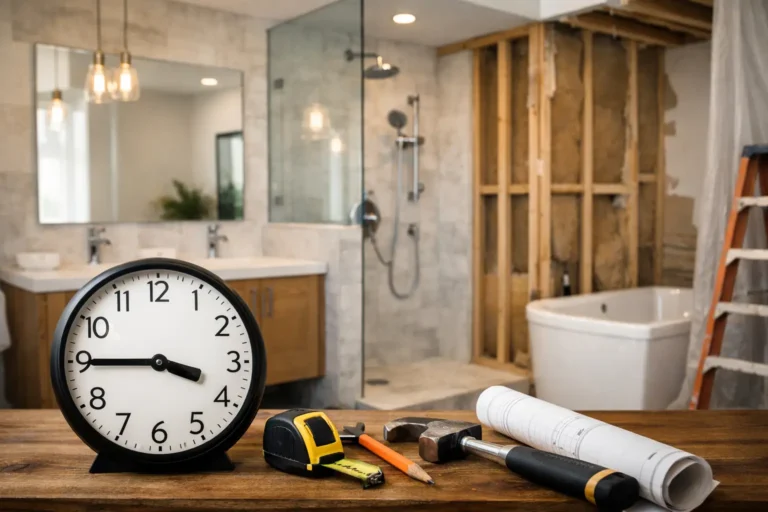
You can live with an outdated bathroom for years, then suddenly one leaking valve, one cracked tile, or one frustrating morning is enough to push the project to the top of the list. When homeowners ask how long bathroom remodel work takes, they usually want a simple number. The honest answer is that most bathroom remodels take anywhere from 2 to 6 weeks for construction, with additional time before that for planning, design, and material ordering.
That range is wide for a reason. A small cosmetic update moves much faster than a full gut renovation. The timeline also depends on plumbing changes, product availability, inspection requirements, and how organized the project is before demolition begins. If you know what affects the schedule, it becomes much easier to plan around the disruption and avoid surprises.
How long bathroom remodel timelines usually are
For a basic bathroom refresh, the on-site work may take around 1 to 2 weeks. This type of project usually keeps the existing layout and focuses on surface-level updates such as a new vanity, toilet, fixtures, flooring, paint, and possibly a simple tub or shower swap.
A standard full bathroom remodel often takes 3 to 5 weeks. That typically includes demolition, plumbing and electrical updates, new tile, waterproofing, vanity installation, painting, and finish work. This is the range many homeowners fall into when they want a meaningful upgrade without changing every structural detail.
A more complex or custom remodel can take 5 to 8 weeks or longer. This usually happens when walls move, plumbing is relocated, custom glass is required, specialty tile is involved, or hidden issues are found after demolition. Older homes can add even more time because once the walls are open, the scope sometimes changes.
The most important distinction is this: construction time is only part of the full project timeline. Planning, design decisions, measurements, ordering materials, and scheduling trades can add several weeks before anyone picks up a hammer.
What happens before construction starts
One reason bathroom renovations feel longer than expected is that homeowners often count only the construction phase. In reality, the front-end planning matters just as much.
The first stage is defining the scope. Are you updating finishes, replacing a tub with a walk-in shower, improving storage, or rebuilding the entire room? Clear goals help your contractor build an accurate timeline from the start.
Next comes design and product selection. Tile, plumbing fixtures, vanities, lighting, mirrors, and hardware all need to be chosen. If those decisions drag on, the schedule does too. If items are selected early and confirmed before work begins, the project tends to move much more smoothly.
Ordering is another major factor. In-stock materials can keep things moving, but custom vanities, special-order tile, and glass enclosures often have longer lead times. Even one missing piece, such as a backordered faucet or damaged vanity top, can affect the sequence of the work.
Permits may also be part of the process, depending on the scope and local requirements. If plumbing, electrical, or structural work is involved, it is better to build permit and inspection timing into the plan instead of treating it like an unexpected delay.
A realistic week-by-week bathroom remodel schedule
Every project is different, but a standard full remodel often follows a pattern like this.
Week 1: Demolition and rough work
The first few days usually involve protecting nearby areas, removing old fixtures and finishes, and opening walls or floors as needed. After demolition, plumbing and electrical rough-ins begin. If the layout is changing, this stage takes longer because supply and drain lines may need to be moved.
This is also the point where hidden issues tend to show up. Water damage, old plumbing, uneven framing, mold, or outdated wiring can all add work that was impossible to fully confirm beforehand.
Week 2: Prep, inspections, and waterproofing
Once rough plumbing and electrical are complete, inspections may be required. After approval, the room is prepped for installation. That can include drywall or cement board, leveling surfaces, and waterproofing wet areas like the shower or tub surround.
This stage is not the most visible, but it is one of the most important. A bathroom that looks great but was rushed behind the walls often causes expensive problems later.
Week 3: Tile and major installations
Tile work usually takes longer than homeowners expect, especially with detailed layouts, multiple tile sizes, niches, benches, or decorative patterns. After tile is installed, it needs time for setting and grout curing.
At the same time, some major pieces may go in, such as the vanity, tub, or shower base, depending on the sequence of the project.
Week 4: Finish work
This is when the room starts to feel complete. Fixtures, lighting, mirrors, trim, accessories, toilets, and final plumbing connections are installed. Painting and touch-ups are usually completed here as well.
If custom shower glass is part of the project, it may be measured after tile is done and installed a little later, depending on fabrication timing.
Final days: Punch list and cleanup
The last step is checking details, testing fixtures, handling minor adjustments, and completing a final cleanup. Good contractors build in time for this rather than treating the finish line like a race.
What makes a bathroom remodel take longer
The biggest delays usually come from decisions, materials, and discoveries behind the walls.
Changing the layout is one of the clearest timeline drivers. Keeping the toilet, shower, and vanity in the same place saves time and labor. Moving them requires more plumbing work and often more coordination.
Custom work also adds time. There is nothing wrong with choosing custom cabinetry, specialty tile, or built-in storage, but these features need longer lead times and more precise installation.
Older homes bring another layer of uncertainty. Once demolition starts, contractors may find subfloor damage, plumbing that no longer meets code, or framing that needs correction before new finishes can go in.
Homeowner change orders can also stretch the project. If you decide midstream to switch tile, add recessed lighting, or upgrade the shower system, the schedule may need to be adjusted. Sometimes the best way to finish sooner is to make the key decisions early and stick with them.
How to keep your bathroom remodel on schedule
If timing matters, preparation matters even more. The smoothest projects are usually the ones that are thoroughly planned before demolition starts.
Choose materials early and confirm that everything is available. That includes the small items homeowners often overlook, like trim pieces, shower valves, fan covers, and hardware. A missing accessory can hold up completion just as easily as a missing vanity.
Work with a contractor who gives you a realistic schedule instead of an overly optimistic one. A dependable timeline should account for inspections, curing times, and trade coordination, not just the best-case scenario.
It also helps to finalize the scope before work begins. Once the crew is on site, every change has a ripple effect. Clear communication, documented selections, and a solid work plan can prevent a lot of unnecessary downtime.
For families with only one full bathroom, logistics matter too. Temporary arrangements can reduce stress while the work is happening. Even when the renovation is moving well, there will still be days when the room is not usable.
Should you expect the unexpected?
Yes, but that does not mean every project becomes a drawn-out ordeal. It means smart planning leaves room for normal renovation realities.
A trustworthy contractor should explain where the timeline is firm and where it depends on site conditions or supplier lead times. That kind of transparency is a good sign. It shows the project is being managed with care, not guesswork.
For homeowners in older properties around Hamilton and nearby communities, this matters even more. Bathrooms in aging homes often carry layers of previous repairs, outdated plumbing, or hidden moisture issues. A careful renovation team will address those problems properly instead of covering them up to save a few days.
So, how long should you plan for?
If you are asking how long bathroom remodel projects really take, a good planning number is 3 to 5 weeks for a typical full renovation, plus several weeks beforehand for design, selections, and ordering. A lighter update may move faster, while custom or more complex work can take longer.
The better question is not just how fast it can be done. It is how well it can be done on a timeline that respects your home, your budget, and your daily routine. A bathroom remodel is disruptive for a short time, but when it is planned carefully and built with attention to detail, the result is something you get to enjoy every single day.
