
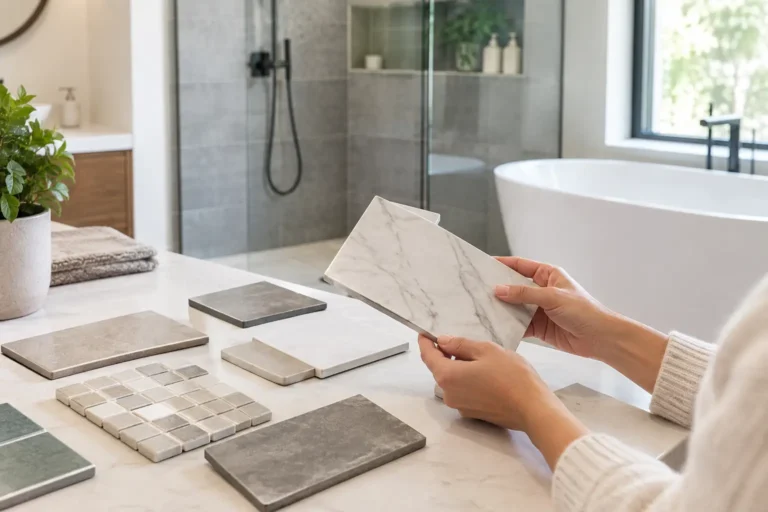
A bathroom tile sample can look perfect under showroom lights and completely different once it meets a small room, a busy morning routine, and real water spots. That is why learning how to choose bathroom tile is about more than finding a color you like. The right tile needs to suit the way your household uses the room, the condition of the space, and the renovation budget you want to protect.
A thoughtful selection can make a compact bathroom feel brighter, make cleaning easier, and hold up beautifully for years. A rushed choice can leave you with slippery floors, grout lines that demand constant attention, or a design that feels dated before the project is complete.
Start With How the Bathroom Will Be Used
Before looking at finishes or patterns, consider who uses the bathroom and what the room needs to do every day. A primary ensuite, a children’s bathroom, and a powder room have very different requirements.
A primary bathroom may be a good place for a larger-format floor tile, a feature wall, or a spa-inspired natural stone look. In a family bathroom, durability and easy cleanup usually deserve more weight. Porcelain tile with a practical finish can handle wet towels, bath time, and frequent cleaning without asking for special care.
Powder rooms offer more design freedom because they do not face the same level of moisture as a full bath. This can be the place to use a bolder pattern, a richer color, or a more decorative wall tile. Even then, the floor should still be comfortable, stable, and easy to maintain.
Think about the room’s traffic, not just its square footage. A beautiful tile is only a successful choice if it works for the people who will live with it.
Choose the Right Tile Material
For most bathroom renovations, porcelain and ceramic are the leading choices. Both are available in an enormous range of styles, from marble looks to warm wood looks and handmade-inspired finishes. The difference comes down to performance and placement.
Porcelain is dense, durable, and highly water-resistant. It is a dependable choice for bathroom floors, shower walls, and wet areas. It also tends to perform well in active households where flooring needs to withstand dropped items, frequent foot traffic, and regular cleaning.
Ceramic tile is often more budget-friendly and works very well on bathroom walls, backsplashes, and low-traffic floors. It can offer a wide range of colors and decorative options. For a full bathroom floor or shower base, confirm that the specific ceramic product is rated for that use.
Natural stone, such as marble, slate, or travertine, brings character that manufactured tile cannot fully duplicate. It also requires more commitment. Stone generally needs sealing, can be more sensitive to certain cleaning products, and varies from piece to piece. It may be the right choice for homeowners who value its natural movement and are comfortable with the maintenance involved.
Glass tile is usually best used as an accent. It catches light beautifully on a shower wall or niche, but it is not typically the most practical option for a main bathroom floor.
How to Choose Bathroom Tile for Floors
Bathroom floors need to do two jobs at once: they need to look good and provide reliable footing when wet. This is where finish matters as much as color.
Highly polished tile can create an elegant, reflective look, especially in a powder room. In a shower room or family bath, however, a polished surface may become slippery when water is present. A matte, honed, or lightly textured porcelain tile is often the safer, more forgiving choice for the main floor.
Check the tile’s slip-resistance rating and ask whether it is appropriate for a wet floor installation. Do not assume a tile is suitable simply because it is displayed in a bathroom setting. Product specifications matter, particularly in shower areas where safety cannot be treated as an afterthought.
Tile size also affects both appearance and installation. Large tiles can make an open bathroom feel calm and expansive because they create fewer grout lines. But they are not automatically best for every room. In a small or uneven space, larger tiles may require more cuts and careful layout planning. They can also be difficult to slope correctly in a shower pan.
Smaller mosaic tiles are often a smart choice for shower floors. Their additional grout lines provide more grip, and their size allows the installer to create the proper slope toward the drain. A large-format shower floor can look striking, but it requires the right product, a skilled installation plan, and precise substrate preparation.
Use Wall Tile to Set the Mood
Wall tile is where homeowners can express more of their personal style without compromising day-to-day performance. A simple white subway tile can feel crisp and timeless, while a vertically stacked layout can make ceilings appear taller. Larger marble-look panels can create a clean, high-end effect with fewer grout lines.
The tile itself is only part of the visual result. Layout changes the design. Horizontal tile can make a narrow room feel wider. Vertical tile can add height. A herringbone or chevron pattern adds movement, but it also increases material waste, installation time, and labor costs.
If you are choosing a patterned tile, consider where it will have the most impact. A feature wall behind a vanity or inside a shower often gives the room personality without overwhelming it. Covering every surface in a busy pattern can make a smaller bathroom feel crowded.
Bring samples home whenever possible. View them beside the vanity finish, countertop, paint color, and fixtures. Look at them in daylight and again with the bathroom lights on. Undertones that are subtle in a showroom can become obvious once they sit next to bright white porcelain, warm wood cabinetry, or brushed metal hardware.
Treat Grout as a Design and Maintenance Decision
Grout is not a minor detail. It affects the final appearance of the room and how much cleaning the surface will require.
A grout color close to the tile creates a quieter, more continuous look. This can help a small bathroom feel less busy and works especially well with large-format tile. A contrasting grout highlights the shape and layout of the tile, which can be attractive with subway tile or geometric patterns but will draw attention to every line.
For a white tile installation, pure white grout may look sharp on day one but can require more upkeep in high-use areas. A soft gray or warm off-white is often more forgiving while still keeping the overall design light.
Grout joint size matters too. Rectified tile, which has precisely cut edges, can often be installed with narrower joints for a more contemporary appearance. Some handmade-look or uneven-edge tiles need wider joints to accommodate their variation. Your installation plan should follow the tile manufacturer’s recommendations rather than chasing an ultra-thin grout line that the product cannot support.
Balance Your Budget Beyond the Tile Price
The cost per square foot is only one part of a tile budget. Installation complexity, waterproofing, preparation, trim pieces, grout, and material waste all affect the total investment.
A lower-priced tile installed in a detailed pattern can cost more overall than a premium tile installed in a straightforward layout. Large tiles may reduce grout lines, but they can require additional handling and more careful preparation. Mosaic sheets may be economical to buy but take longer to install.
It is also wise to order extra material. Tile from a future production run may vary slightly in shade or finish, and discontinued products can be difficult to match. Extra tile gives you a margin for cuts during installation and a few pieces for potential repairs later.
Saving money on visible finishes can be reasonable. Saving money by skipping proper shower waterproofing, floor preparation, or professional installation is where a bathroom project can become costly. Tile is only as dependable as the surface behind it.
Keep the Whole Bathroom in View
The best tile choice supports the entire room rather than competing with every finish around it. If the vanity has dramatic wood grain, a quieter floor may provide balance. If the countertop is simple, a feature tile can become the focal point.
Limit the number of competing finishes, particularly in a smaller bathroom. A practical approach is to choose one main field tile, one accent or feature tile, and a coordinated floor. This still creates depth while keeping the room cohesive.
Consider comfort as well. Tile can feel cool underfoot, which may be welcome in warm weather but less appealing on cold mornings. If the bathroom is being fully renovated, radiant floor heating can be worth discussing before the tile is installed. It adds comfort without changing the look of the space.
A well-chosen bathroom tile should make everyday routines feel easier, not more complicated. Take the time to compare samples, ask practical questions about maintenance and slip resistance, and build the selection around how your home actually functions. With the right planning and craftsmanship, the finished room will feel like it was designed for your life from the start.
