
A bathroom that looked current ten years ago can feel dated fast – not because the fixtures stopped working, but because the way homeowners use the space has changed. The latest trends in bathroom remodeling are less about showing off and more about making daily routines easier, more comfortable, and better suited to real life.
That shift matters if you are planning a renovation in a family home. A bathroom has to stand up to busy mornings, provide enough storage, feel easy to clean, and still look like it belongs with the rest of the house. The best remodels today balance style with practicality, and that is where smart planning makes all the difference.
What the latest trends in bathroom remodeling are really about
The biggest trend is not one material or one color. It is a change in priorities. Homeowners are asking for bathrooms that feel calmer, work harder, and age better over time.
In practice, that means fewer flashy details that go out of style in a year and more attention to layout, lighting, storage, and finish choices that hold up to daily use. A beautiful bathroom still matters, of course, but beauty now tends to come from clean design, thoughtful details, and better function rather than excess.
Another noticeable change is that people want their bathrooms to feel personal. Matching showroom sets are giving way to spaces with more character – mixed textures, warmer tones, and selections that reflect the rest of the home instead of feeling separate from it.
Warm, lived-in design is replacing cold minimalism
For years, bathrooms leaned heavily on bright white finishes, cool grays, and crisp modern lines. That look is still around, but it is no longer the default. Many homeowners now prefer bathrooms that feel softer and more inviting.
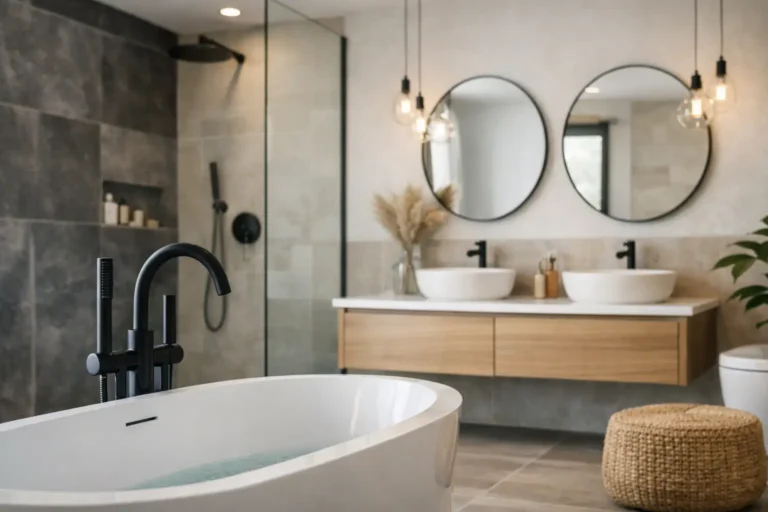
Warmer whites, taupe, greige, soft beige, and muted earth tones are showing up on tile, walls, and cabinetry. Natural wood vanities or wood-look finishes are especially popular because they bring warmth without making the room feel heavy. Matte finishes also continue to gain ground over high-gloss surfaces, largely because they look more relaxed and tend to hide fingerprints and water spots better.
This does not mean every bathroom should turn rustic. In many homes, the best result is a balanced mix – maybe a clean-lined vanity in a warm oak finish, paired with simple tile and understated hardware. It feels current without chasing a short-term trend.
Showers are getting bigger attention than tubs
One of the clearest bathroom remodeling shifts is the growing focus on the shower. In many primary bathrooms, homeowners are choosing larger walk-in showers over oversized tubs that rarely get used.
That makes sense from a day-to-day standpoint. A well-designed shower can feel more luxurious, improve accessibility, and often make better use of square footage. Frameless glass remains a popular choice because it keeps the room feeling open, but the design details inside the shower are getting just as much attention. Built-in niches, bench seating, large-format tile, and linear drains all contribute to a cleaner, more tailored look.
Tubs are not disappearing completely. In family bathrooms, they are still practical for children, and in larger primary suites, a freestanding tub can work well if the room truly supports it. The trade-off is space and budget. If a tub is being added mainly for looks and not for how the household actually lives, many homeowners later wish they had invested more in the shower or storage instead.
Better storage is becoming a top priority
Storage is not the most glamorous part of a renovation, but it is often what makes the new bathroom feel better six months later. Homeowners are paying closer attention to where everyday items go, and that is shaping vanity design, medicine cabinets, and built-in solutions.
Floating vanities are still popular, especially in modern spaces, but they are not always the right answer if maximum storage is the goal. In many homes, a well-built vanity with deep drawers provides far more useful organization than a cabinet with standard doors. Drawer dividers, pull-out organizers, and recessed medicine cabinets can make a surprisingly big difference in how uncluttered the room feels.
There is also more interest in storage that does not look obviously utilitarian. Linen towers, integrated shelving, and custom niches help keep essentials close at hand while preserving a clean finish. Good bathroom design now treats storage as part of the visual plan, not an afterthought.
Lighting is finally being planned properly
Too many older bathrooms rely on a single ceiling fixture and a mirror light that flatters no one. One of the healthier trends in remodeling is that lighting is being layered with more intention.
Vanity lighting is being placed to reduce shadows, overhead fixtures are being selected for both function and ambiance, and dimmers are becoming a standard request. Backlit mirrors are also gaining popularity, especially in contemporary bathrooms, because they provide a crisp look and useful task lighting at the same time.
Natural light matters too. When a remodel includes an opportunity to enlarge a window, add privacy glass, or improve how light moves through the room, the bathroom often feels more expensive even if the finishes are fairly restrained. Good lighting does not just improve the appearance of the space. It improves how the space works every morning and every night.
Tile choices are getting simpler, but more intentional
Homeowners are still using tile to create impact, but the approach has changed. Instead of combining several busy patterns and accent bands, many are choosing fewer tile types and letting scale, texture, or layout do the work.
Large-format wall tile is especially appealing because it creates a cleaner appearance with fewer grout lines. That can make a bathroom easier to maintain and visually larger. On floors, porcelain remains a strong choice for durability, and slip resistance is getting more attention than it used to – especially in homes where kids, older adults, or long-term accessibility are part of the planning conversation.
Pattern is not gone. It is just being used more selectively. A statement floor, a textured shower wall, or a vertically stacked tile layout can bring personality without overwhelming the room. As with most remodeling decisions, restraint tends to age better than trying to fit every trend into one space.
Smart features are staying, but only when they add real value
Technology in bathrooms has moved beyond novelty. Heated floors, better ventilation, programmable lighting, and comfort-height fixtures are all examples of upgrades that homeowners continue to request because they improve daily life.
That said, not every smart feature is worth the cost. A heated floor in a cold climate can be a great investment in comfort, especially in a tile-heavy bathroom. A high-end digital shower system may be worthwhile for some households, but for others it adds expense without much practical payoff. The right choice depends on budget, habits, and how long you plan to stay in the home.
This is where good contractor guidance matters. Trend-driven upgrades should still make sense for the people using the bathroom. At HB Renovations, that kind of decision-making is part of building a space that looks great but also feels right once the project is complete.
Accessibility and comfort are influencing design earlier
One of the most meaningful changes in bathroom remodeling is that accessibility is being considered from the start, not only after it becomes necessary. That does not mean every bathroom needs to look clinical. In fact, many accessible features now blend naturally into modern design.
Curbless showers, wider clearances, handheld shower heads, bench seating, and strategically placed grab bars can all be integrated in a way that feels polished and intentional. Even simple decisions, like choosing lever handles or planning better entry space around the vanity, can improve comfort for a wide range of users.
For homeowners renovating a long-term family home, this kind of planning is often money well spent. It supports aging in place, helps accommodate guests of different ages and abilities, and can reduce the need for another major renovation later.
The best bathroom trend is still a well-planned layout
It is easy to get pulled toward finishes first, but layout still drives the success of the project. If the vanity is cramped, the door swing is awkward, the shower feels tight, or the storage is insufficient, even expensive materials will not fix the problem.
That is why the most successful bathroom remodels begin with how the room should function. Sometimes that means moving plumbing to improve flow. Sometimes it means keeping the layout mostly intact and investing the budget where it counts most. There is no one-size-fits-all answer. A hall bathroom used by kids has different priorities than a primary ensuite meant to feel like a retreat.
Following trends can be helpful when they point you toward smarter choices, but the goal should not be to copy a showroom. The goal is to build a bathroom that fits your home, your routine, and your budget in a way that still feels right years from now.
If you are planning a remodel, focus on the ideas that improve daily life first. The finishes should support that decision, not lead it. That is usually where the best bathrooms begin.
