
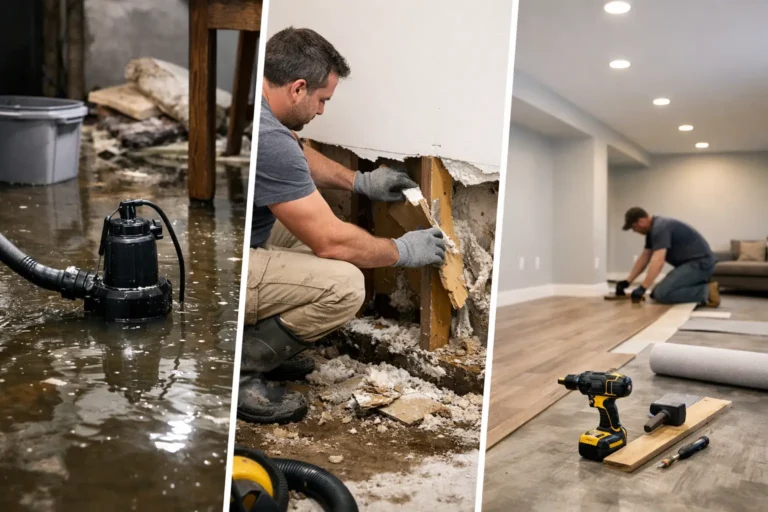
Three storms in a short period can expose weaknesses that have been building for years: overwhelmed drains, aging foundation waterproofing, poor grading, and finished basements with no margin for water. The St. Catharines flooding of July 28, 2026, reportedly flooded thousands of basements and prompted the mayor to demand answers. For homeowners, the immediate question is more practical: what should happen before rebuilding a damaged basement?
A basement renovation after a flood should not begin with new drywall, flooring, or paint. It starts with understanding where the water came from and correcting the conditions that allowed it in. Otherwise, a beautiful new basement can be vulnerable to the next major storm.
Start With Safety, Documentation, and Drying
If there is standing water, electrical hazards, sewage backup, or signs of structural damage, bring in qualified professionals before entering or removing materials. Sewage-contaminated water requires a higher level of cleanup than rainwater, and porous materials affected by it often cannot be safely saved.
Document everything before disposal. Take photos and videos of water lines, damaged finishes, appliances, stored belongings, and visible entry points. Keep records of cleanup invoices, moisture readings, and contractor assessments. This documentation can help with an insurance claim and gives your renovation team a clearer picture of what failed.
Drying is not the same as making a room feel dry. Water can remain behind baseboards, inside wall cavities, beneath vinyl flooring, and in insulation. Dehumidifiers, air movement, and professional moisture testing matter because mold can develop quickly in concealed spaces. Damaged drywall and insulation may need to be removed above the visible water line so the framing can dry fully.
What St. Catharines Flooding Can Teach Homeowners
When thousands of basements flood during the same weather event, the cause may be larger than any one property. Intense rainfall can exceed the capacity of municipal stormwater systems. That does not automatically mean every basement leak is a municipal issue, or that homeowners have no protective options.
A renovation assessment should separate the possible sources of water. Was it a sewer backup through a floor drain or toilet? Did water enter through foundation cracks or window wells? Did surface water run toward the house because of sloping, clogged eavestroughs, or disconnected downspouts? More than one source can be involved.
That distinction affects the right solution. A backwater valve can help reduce sewer-backup risk, while exterior drainage improvements address water collecting against the foundation. Interior waterproofing may manage seepage, but it is not a substitute for correcting obvious grading and drainage problems outside.
Plan the Repair Before Choosing Finishes
It is understandable to want the basement restored quickly, especially when it is a family room, office, rental space, or storage area. But the best time to improve flood resilience is while finishes are already open.
A thoughtful basement renovation may include repairing foundation cracks, extending downspouts away from the home, improving lot grading, installing or upgrading a sump pump, and adding battery backup where appropriate. The right combination depends on the home, its drainage conditions, and the water source. No contractor should promise that one product will solve every flooding problem without investigating first.
For the rebuilt space, choose materials with recovery in mind. Tile, removable area rugs, moisture-tolerant wall systems, and raised or easily replaceable finish details can make future cleanup less destructive. If carpeting is still the right comfort choice for part of the basement, consider limiting it to lower-risk areas and using a moisture-resistant underpad.
Mechanical equipment deserves attention as well. Furnaces, water heaters, electrical panels, and laundry appliances may need protection from water exposure. In some homes, relocating vulnerable equipment or raising it can be part of a broader renovation plan. This requires coordination with licensed trades and must meet applicable building and electrical requirements.
Avoid the Fastest, Most Expensive Mistake
The costly mistake is rebuilding exactly what was there before because it appears faster. Replacing wet drywall with new drywall while leaving an unresolved drainage issue only restarts the clock. The same is true of covering a damp concrete wall with finished framing before moisture conditions have been assessed.
Homeowners should also avoid signing broad repair scopes before they understand what is covered by insurance, what needs municipal review, and what upgrades are worth making at the same time. Emergency cleanup and a long-term renovation are related, but they are not always the same project. A clear plan keeps those decisions from being rushed together.
For homeowners in the Hamilton area and nearby communities, HB Renovations approaches basement work with the same practical standard: address the cause, protect the structure, and then create a space that is comfortable and built for everyday life. After a major storm, a careful assessment is the first step toward rebuilding with more confidence.
