
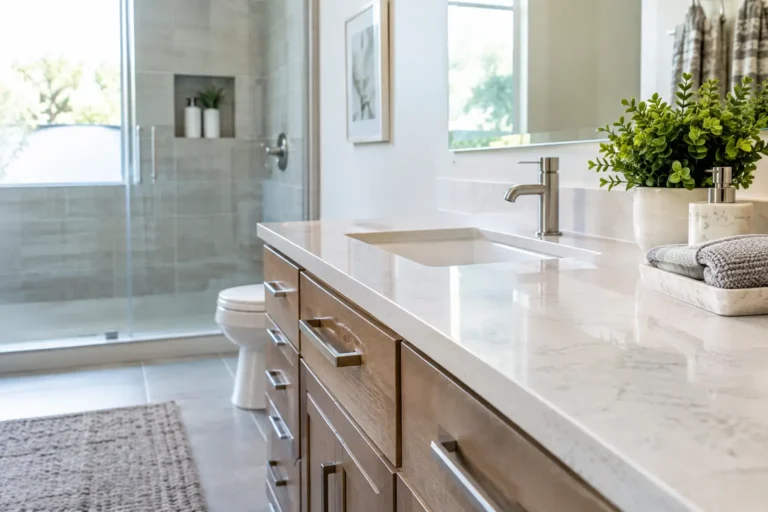
A bathroom can look finished on day one and still disappoint within a few years if the materials are not suited to moisture, cleaning, and daily use. The best durable bathroom surfaces are not always the most expensive ones. They are the surfaces that fit how your household actually lives, resist water where it matters most, and can be installed correctly from the start.
For a family bathroom, that may mean porcelain tile that stands up to wet shoes, dropped products, and frequent mopping. For a primary bathroom, it may mean a quartz vanity top that keeps its polished look without requiring special maintenance. The right choice comes down to location, budget, slip resistance, and the level of care you are comfortable taking on.
What Makes a Bathroom Surface Durable?
Durability is more than hardness. A bathroom material needs to handle moisture, temperature changes, cleaning products, and regular impact without staining, cracking, warping, or becoming difficult to maintain. It also needs to work with the systems behind it.
For example, even excellent tile will not protect a shower if the waterproofing beneath it is incomplete. A beautiful vanity top can fail around the sink if seams and plumbing connections are poorly finished. Lasting results come from pairing suitable materials with careful preparation and detail-oriented installation.
When helping homeowners plan a bathroom renovation, we generally assess four practical questions: How often will the room be used? Where will water sit or splash? Who will be using the space? And how much routine maintenance makes sense for the household? Those answers narrow the choices quickly.
Best Durable Bathroom Surfaces by Location
Porcelain tile for floors and showers
Porcelain tile is one of the strongest all-around choices for bathroom floors, shower walls, and shower floors. It is dense, highly water-resistant, and available in styles that resemble stone, concrete, wood, and marble. It also holds up well to busy family routines and does not require sealing in the same way natural stone does.
For bathroom flooring, choose a porcelain tile with a finish that offers enough grip when wet. Highly polished tile can look striking, but it may be slippery near a tub or shower. Matte, textured, or lightly structured finishes are often a better fit for bathrooms used by children, older adults, or anyone who values safer footing.
Large-format porcelain creates a clean, modern appearance and has fewer grout lines to clean. Smaller tiles can be more practical on a shower floor because the additional grout joints add traction and help the tile follow the slope toward the drain. This is one area where the right format matters as much as the material itself.
Ceramic tile can also work well, particularly on bathroom walls and lower-traffic floors. However, porcelain is generally the stronger choice for wet zones and high-use bathrooms because it absorbs less water and offers greater density.
Quartz for vanity countertops
Quartz is a dependable countertop option for most bathroom vanities. Its nonporous surface resists everyday stains from makeup, toothpaste, soap, and hair products. Unlike many natural stones, quartz does not typically need periodic sealing, which makes it appealing for homeowners who want an easy-care finish.
Quartz is available in a wide range of colors and patterns, from quiet solid tones to marble-inspired veining. That flexibility makes it easy to coordinate with tile, cabinetry, fixtures, and wall paint without sacrificing practicality.
There are a few considerations. Quartz is durable, but it is not indestructible. Heavy impact near an edge can chip it, and prolonged exposure to extreme heat is not ideal. In a bathroom, though, those risks are usually limited. A well-supported quartz top with a professionally cut sink opening is built for years of normal use.
Solid surface for clean, low-maintenance counters
Solid-surface countertops are another practical choice, especially for homeowners who prefer a smooth, understated look. These materials are nonporous and can often be repaired if they develop minor scratches or surface damage. Integrated sinks are also possible, creating a continuous counter-and-basin design with no rim where residue can collect.
Solid surface does not usually mimic natural stone as convincingly as quartz, and it can scratch more easily. Still, it performs very well in low- to moderate-impact bathroom settings. It is particularly useful in contemporary bathrooms where easy cleaning and minimal seams are priorities.
Acrylic or fiberglass for tub and shower surrounds
Acrylic and fiberglass tub or shower surrounds can be a smart durability choice when installed properly. They are warm to the touch, easy to clean, and have fewer grout lines than a tiled shower. For a secondary bathroom, a rental property, or a renovation where budget control is essential, they can provide a clean and reliable result.
Acrylic generally feels more substantial and tends to hold up better than lower-cost fiberglass. Both options depend heavily on proper support, secure installation, and sealed edges. If the unit flexes underfoot or the perimeter is not sealed correctly, water can eventually find its way behind the surround.
For homeowners who want a custom shower layout, built-in niches, or a higher-end tile design, porcelain tile remains the more flexible choice. But a quality acrylic system is not a compromise when simplicity and low maintenance are the main goals.
Natural stone for homeowners willing to maintain it
Natural stone brings character that manufactured materials cannot fully duplicate. Marble, limestone, travertine, and slate each have distinct movement, texture, and variation. They can create a beautiful primary bathroom, especially when the design calls for a more classic or organic feel.
The trade-off is maintenance. Many stone surfaces are porous and require sealing. Some can etch or stain from common bathroom products, and certain finishes may become slippery when wet. Marble, for example, can develop a patina over time. Some homeowners love that lived-in character; others find it frustrating.
Natural stone is best selected with realistic expectations. It can be a durable long-term material, but it is not a hands-off one. If you want the appearance of stone without the maintenance commitment, porcelain tile and quartz offer convincing alternatives.
Do Not Overlook Grout, Caulk, and Waterproofing
The most durable tile is only as reliable as the work supporting it. In showers, proper waterproofing behind and beneath the tile is essential. Tile and grout are finish surfaces, not the waterproof layer. A professionally built shower needs the correct membrane system, properly sealed corners and penetrations, and a floor slope that directs water to the drain.
Grout selection matters, too. Cement-based grout remains widely used and performs well when installed and maintained correctly, but it may require sealing. Epoxy grout offers excellent stain and moisture resistance and is often worth considering for shower floors or busy bathrooms. It can cost more and requires skill to install, so it is not always necessary for every application.
Flexible caulk should be used where different planes meet, such as wall corners, tub edges, and the joint between a backsplash and countertop. Grout in these movement areas can crack over time. This small detail has a major effect on how well the bathroom resists water intrusion.
Choosing Surfaces for a Family Bathroom
A family bathroom needs finishes that are forgiving. Porcelain floor tile with a matte finish, a durable acrylic tub or a properly waterproofed tiled shower, and a quartz vanity top make a practical combination. These materials clean up easily and do not demand constant attention to stay looking good.
In a smaller bathroom, selecting the same porcelain tile for the floor and shower walls can make the room feel more connected. Use a smaller coordinating tile on the shower floor for traction. Pair it with a simple quartz counter and quality cabinetry that is protected from splashes around the sink.
For homes in Hamilton, Burlington, Ancaster, and nearby communities, a bathroom renovation should also account for the age and condition of the home. Updating surfaces may reveal plumbing, ventilation, or subfloor issues that need attention before finishes go in. Addressing those details early protects both the investment and the finished appearance.
The Best Choice Is the One That Fits Your Routine
There is no single surface that is right for every bathroom. Porcelain is the leading choice for moisture-prone floors and showers. Quartz is hard to beat for a low-maintenance vanity top. Acrylic surrounds offer practical value, while natural stone rewards homeowners who appreciate its character and are prepared to care for it.
A well-planned bathroom should feel good to use every day, not just look good in photos. Choosing materials with honest guidance, sound waterproofing, and skilled installation gives your new space the best chance to stay comfortable, functional, and beautiful for years to come.
