
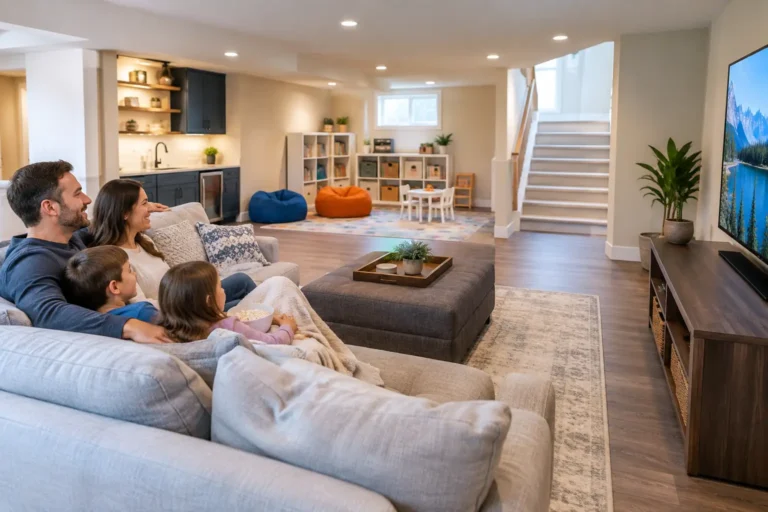
A finished basement can solve a familiar family problem: everyone needs space, but no one wants to give up the kitchen table, living room, or a bedroom to get it. The best family friendly basement features turn unused square footage into a comfortable extension of the home – one that can handle playtime, movie nights, homework, guests, and the everyday mess that comes with a busy household.
The right layout is not simply about adding a large open room. A basement needs thoughtful moisture control, safe finishes, practical storage, and enough flexibility to serve your family as it changes. A preschool play area may eventually become a gaming room, homework zone, or teen hangout. Planning for that shift protects the value of your renovation and helps the space work harder from day one.
Start With a Dry, Comfortable Foundation
Before choosing flooring, paint colors, or furniture, make sure the basement is ready to be finished properly. Basements are naturally cooler and more vulnerable to moisture than above-grade rooms. If humidity, water staining, musty odors, or foundation concerns are present, those issues should be addressed before walls and finishes go in.
Proper insulation, vapor management, drainage considerations, and HVAC planning make a major difference in year-round comfort. In Hamilton and surrounding communities, seasonal temperature changes can make an unfinished or poorly insulated basement feel cold and damp. A well-planned renovation should create a space that feels like part of the home, not an area family members avoid for half the year.
Good lighting also belongs in the early planning stage. Recessed ceiling lights provide broad, reliable illumination without taking up headroom, while dimmable zones allow the room to shift from active play space to relaxed movie room. Where natural light is available, keep window areas open and bright rather than blocking them with oversized furniture or storage.
Best Family Friendly Basement Features for Everyday Use
The most successful family basements usually combine a few distinct zones rather than forcing every activity into one oversized room. Your household’s routines should determine the priorities. A family with young children may need a protected play area and a bathroom nearby, while families with teens may place more value on a media room, snack station, and charging space.
Durable, Warm Flooring
Basement flooring has to stand up to more than foot traffic. It may see craft supplies, dropped toys, pet accidents, wet boots, and the occasional spilled drink during a game. Luxury vinyl plank and quality vinyl tile are popular options because they are durable, easy to clean, and available in finishes that bring warmth to the room. Carpet can still work well in a designated media or lounge area, especially when paired with a moisture-conscious subfloor and stain-resistant material.
The best choice depends on how the space will be used. Hard-surface flooring is often the better fit for an active playroom or multipurpose room, while carpet can make a TV area feel quieter and more comfortable. Area rugs can soften the room without committing the entire basement to a surface that may be harder to maintain.
Built-In Storage That Hides the Clutter
A family basement without storage can become the place where clutter goes to stay. Built-in cabinets, closed storage benches, shelving, and under-stair storage give toys, board games, sports equipment, blankets, and seasonal items a defined home.
Closed cabinetry is especially valuable because it makes the room feel orderly even when family life is not. Open shelves can be useful for books, display items, or baskets that children can reach independently, but a mix of open and concealed storage usually delivers the best result. Consider leaving room for storage needs you do not have yet. As children grow, toy bins may become shelves for games, hobby supplies, or electronics.
A Flexible Open Area
A large open zone is one of the most useful features in a family basement, provided it has a purpose. It can support floor play, family exercise, indoor rainy-day activities, or extra seating when guests visit. Avoid filling every wall with furniture. A clear central area makes the space more versatile and easier to adapt later.
Flexibility does not mean the room should feel unfinished. Use lighting, rugs, furniture placement, or a partial wall to suggest different zones without closing them off completely. This approach keeps sightlines open for parents while giving each activity its own place.
A Comfortable Media and Game Space
A media room is often at the top of a basement wish list, and for good reason. Basements naturally provide separation from the main living areas, making them a practical place for movies, video games, and weekend gatherings. Comfortable seating, proper wiring, sound-conscious finishes, and carefully placed lighting can make the space enjoyable without turning it into a dark, single-purpose room.
Plan the television wall early. Electrical outlets, data connections, speaker wiring, and cable management are much easier to handle before drywall is complete. Consider how the room will function when the screen is off, too. A media area should still feel inviting for conversation, reading, or hosting friends.
A Bathroom Within Reach
Adding a basement bathroom can make a major difference in daily convenience. It is helpful for children using the playroom, guests staying overnight, and family gatherings that would otherwise send everyone upstairs. Even a compact powder room can improve how the level functions.
A full bathroom offers more flexibility if you may add a guest room, in-law space, or future suite. The trade-off is cost and plumbing complexity, so it is worth discussing early in the design process. In some homes, locating the bathroom close to existing plumbing helps keep the project more efficient.
A Snack Bar or Compact Beverage Area
A full basement kitchen is not necessary for every family, but a small beverage station or snack bar can be a practical addition. Lower cabinets, a countertop, a bar sink, and a compact refrigerator can reduce trips upstairs during movie nights and gatherings. It also gives older children and guests a convenient place to grab a drink without interrupting the main kitchen.
This feature works best when it fits your actual habits. If your family hosts often or spends long stretches in the basement, it can be a smart investment. If the basement is mainly used for occasional play, the same budget may be better directed toward storage, flooring, or a bathroom.
Build Safety Into the Design
Family-friendly design should never treat safety as an afterthought. A properly finished basement needs code-conscious electrical work, adequate smoke and carbon monoxide alarms, safe stair railings, and clear pathways. If the basement includes a bedroom or is intended for overnight guests, emergency egress requirements need careful attention.
Choose rounded furniture edges where possible, secure tall shelving to the wall, and avoid placing heavy items where children may climb. Outlet placement matters as well. Sufficient outlets reduce the need for extension cords across the floor, particularly around a media area, desk, or craft table.
Sound control is another practical consideration. Insulation between floors, acoustic treatments, and solid doors can help contain movie noise, music, and active play. This is not about making the basement silent. It is about allowing one family member to relax upstairs while another uses the lower level without constant disruption.
Create a Space That Can Grow With Your Family
The strongest basement designs look beyond the family’s current stage. A dedicated toddler room may be perfect now, but a flexible recreation room often holds its value longer. Instead of building too many permanent walls, consider one enclosed room for a future office, guest bedroom, or quiet study area, with the rest of the basement kept open and adaptable.
Include practical details that make later changes easier. Extra outlets, structured wiring, durable finishes, and storage that can be reconfigured all give the room a longer useful life. Neutral permanent finishes also allow the personality of the space to change through paint, rugs, artwork, and furniture rather than another major renovation.
A successful family basement should feel polished enough for company and relaxed enough for real life. When every decision is guided by how your household actually spends time together, the result is more than additional square footage. It becomes the room where ordinary evenings are easier, weekends have more room to unfold, and your home continues to support the family you are becoming.
