
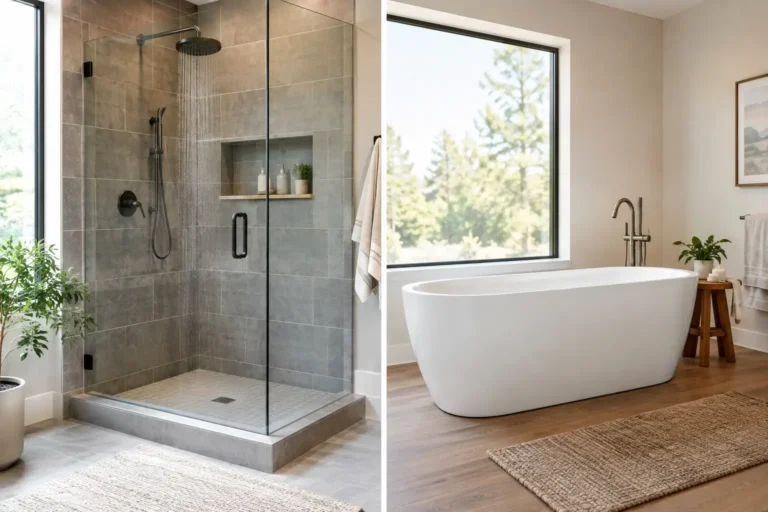
The right bathroom layout can change the rhythm of every morning and evening. When homeowners weigh a custom shower versus bathtub, the best answer is rarely about what looks best in a showroom. It comes down to who uses the room, how much space is available, what condition the existing plumbing is in, and how long you plan to live in the home.
A well-planned bathroom renovation should make daily life easier while adding lasting appeal to your property. Here is how to make a choice you will feel good about long after the tile is installed.
Start With How Your Household Uses the Bathroom
A custom shower is often the practical choice for busy households. It is easy to step into, quick to use, and highly adaptable to the room. A walk-in shower can include a bench, built-in niches for toiletries, multiple showerheads, and glass panels that make a compact bathroom feel more open.
For homeowners who prefer a fast, comfortable routine, a shower may be used every day while a tub goes untouched. Replacing an underused bathtub with a custom shower can give the entire bathroom a more intentional layout, especially when storage or accessible entry is a priority.
A bathtub still serves an important purpose in many homes. Families with young children often appreciate having a tub for bath time. Some homeowners also value it as a place to relax at the end of the day. If soaking is part of your regular routine, eliminating the tub can feel like giving up a feature you genuinely enjoy.
The first question is simple: do not renovate for an imaginary future homeowner at the expense of how your family lives now. Consider the bathrooms elsewhere in the house, then decide what this particular room needs to do.
Custom Shower Versus Bathtub: Comparing the Key Factors
Space and layout
In a small bathroom, a custom shower can create visual breathing room. A clear glass enclosure, light finishes, and a properly sized shower base can make the footprint feel less crowded than a standard tub-shower combination. Custom work also allows the shower to fit the room rather than forcing the room to fit a prefabricated unit.
That does not mean every bathroom should lose its tub. A standard alcove tub can be an efficient use of space when the room is narrow and the plumbing is already positioned for it. In some layouts, trying to build a larger shower may require moving walls, relocating drains, or reducing storage, which can add cost without improving the room enough to justify it.
The strongest designs begin with accurate measurements and a clear plan for door swings, toilet clearance, vanity depth, ventilation, and lighting. A shower that looks generous on a plan can feel cramped if the glass door opens into a tight walkway. Likewise, a tub can feel integrated and purposeful when it is paired with the right surround, fixtures, and storage.
Accessibility and long-term comfort
A curbless or low-threshold shower is easier to enter than a traditional bathtub. That matters for homeowners planning to stay in their homes as they age, as well as anyone recovering from an injury or managing mobility concerns. Features such as a built-in bench, handheld showerhead, slip-resistant flooring, and properly placed blocking for future grab bars can add safety without making the bathroom feel clinical.
A bathtub requires stepping over a higher edge, which can become less convenient over time. For this reason, a shower is often the smarter investment in a primary bathroom intended for long-term use.
Still, accessibility is not only about the shower. Thoughtful clearances, good lighting, reliable ventilation, comfortable vanity height, and flooring with traction all contribute to a bathroom that works well every day.
Cleaning and maintenance
Both options require care, but the materials and details make a major difference. A tiled shower offers a tailored look and nearly unlimited design flexibility, though grout lines need periodic cleaning and maintenance. Larger-format tile, quality grout, a well-designed slope to the drain, and a recessed niche can reduce places where water and soap residue collect.
A tub-shower combination can be simple to clean, particularly with a one-piece surround. It also contains splashing well, which is useful for children. However, shower curtains can trap moisture, and tight corners around a tub ledge are easy to overlook.
For a custom shower, proper waterproofing behind the finished surface is non-negotiable. The tile is the visible finish, but the work behind it protects the home. Experienced installation, suitable materials, and attention to drainage are what keep a beautiful shower performing as it should.
Cost and renovation scope
A bathtub replacement can be more straightforward when the new tub uses the existing location and plumbing connections. That can make it a sensible option when the project budget is focused on finishes, fixtures, and improving an otherwise functional layout.
A custom shower can involve more detailed work. Depending on the design, it may require a new shower pan, waterproofing system, drain adjustment, glass enclosure, tile installation, and upgraded plumbing fixtures. If the layout changes, costs can rise further due to plumbing, electrical, framing, or ventilation updates.
The lowest initial price is not always the best value. A poorly built shower can lead to water damage and expensive repairs, while a well-executed custom shower can improve comfort and hold up for years. The right approach is to establish a realistic budget early, decide where craftsmanship cannot be compromised, and choose finishes that balance appearance with durability.
Resale appeal
Many homeowners worry that removing the only bathtub will hurt resale value. That concern is reasonable. A home with no bathtub can be less appealing to some buyers, especially families with young children. If you are renovating a house with only one full bathroom, keeping a tub or a tub-shower combination is often the safer choice.
If the home has multiple bathrooms, the decision becomes more flexible. A common strategy is to keep at least one bathtub somewhere in the home while creating a more luxurious, functional shower in the primary bathroom. This gives current owners the daily convenience they want without removing an option future buyers may appreciate.
Resale is only one part of the equation. Buyers also respond to bathrooms that feel clean, current, practical, and professionally finished. A well-designed shower with quality tile and glass can be a major selling feature, particularly in a primary suite.
When a Custom Shower Is Usually the Better Choice
A custom shower is often a strong fit when a tub is rarely used, the bathroom serves adults most of the time, or the goal is to create a more open and updated primary bath. It also makes sense when accessibility is a concern or when a homeowner wants a personalized layout with storage niches, a bench, or a larger showering area.
In homes across Hamilton, Burlington, Ancaster, and nearby communities, many primary bathroom renovations prioritize a walk-in shower because it supports a simpler daily routine. The key is making sure the new layout provides enough storage and leaves at least one practical bathing option elsewhere in the home when possible.
When Keeping a Bathtub Makes More Sense
Keep the tub when it is the only one in the house, when young children use the bathroom regularly, or when soaking baths are part of your routine. A tub can also be the practical choice if the existing layout is efficient and your renovation goals are more about updating worn finishes than changing how the room functions.
A modern tub-shower combination does not have to feel dated. With attractive wall tile, a quality glass panel or properly fitted enclosure, updated fixtures, and good lighting, it can look polished while serving several needs in one compact space.
Make the Decision Before Choosing Tile
It is easy to fall in love with a freestanding tub or a dramatic walk-in shower online. The smarter sequence is to decide how the bathroom needs to work, confirm what the existing structure and plumbing allow, and then select materials that suit the plan.
A trusted renovation contractor can help identify trade-offs before construction begins, including whether moving plumbing is worthwhile, how to protect the budget, and which design details will improve the finished room most. HB Renovations approaches those conversations with the same care we would bring to our own homes: clear options, honest guidance, and workmanship built for everyday use.
Choose the feature that supports the life happening in your home now, while keeping a thoughtful eye on the years ahead. The best bathroom is not the one with the most expensive fixture. It is the one you enjoy using every day.
