
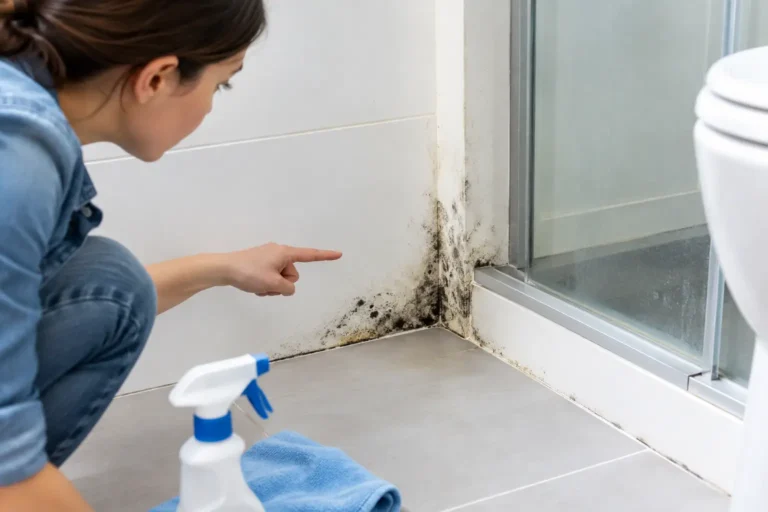
A bathroom can look clean and still be creating the conditions mold needs. A dark line along the caulk, spotting on the ceiling, or a musty smell after a shower is usually not a housekeeping failure. It is a moisture-management problem. Understanding what causes bathroom mold helps homeowners address the source instead of repeatedly scrubbing the same areas.
Bathroom Mold Starts With a Moisture Pattern
Mold spores are naturally present in indoor and outdoor air. They become a visible problem when they land on a surface that stays damp long enough to support growth. Bathrooms are especially vulnerable because they combine frequent humidity, warm temperatures, limited airflow, and surfaces that collect soap residue and dust.
One steamy shower will not usually cause a serious mold issue. The concern is repeated moisture that does not leave the room. When the mirror stays fogged for an hour, towels remain damp overnight, or condensation returns to the same ceiling corner every day, that moisture pattern gives mold a reliable place to grow.
Mold can grow on grout, caulk, painted drywall, ceilings, window frames, shower curtains, bath mats, and even the back of a vanity. Some of these materials are more porous than others, but all can hold the small amount of organic material mold uses as food. The moisture is what turns that ordinary buildup into a recurring problem.
What Causes Bathroom Mold Most Often?
Humidity That Has Nowhere to Go
The most common cause is high humidity paired with inadequate ventilation. Hot shower air carries a great deal of moisture. When it hits cooler walls, ceilings, windows, and fixtures, it condenses into tiny droplets. If the bathroom exhaust fan is too weak, poorly ducted, or simply not used long enough, the room may dry slowly after every shower.
A fan that turns on but does not noticeably clear steam may not be doing its job. In some homes, the fan is undersized for the room. In others, dust buildup, a blocked exterior vent, long duct runs, or ductwork that is disconnected in an attic reduces its effectiveness. Opening a window can help in mild weather, but it is not always a dependable substitute, especially during cold or humid conditions.
Small Plumbing Leaks
Not all bathroom leaks create a puddle. A slow drip under a sink, a loose toilet seal, a failing shower valve, or a crack in grout can allow water to reach hidden spaces over time. By the time staining or a musty odor appears, drywall, framing, or flooring may have been exposed to moisture for much longer than expected.
Pay attention to soft flooring near a toilet or vanity, peeling paint, bubbling baseboards, stains on the ceiling below an upstairs bathroom, and a cabinet that smells damp. These are not cosmetic concerns to cover up. They are clues that water may be getting behind finished surfaces.
Water Getting Behind the Shower Surround
Showers take more water exposure than any other part of the bathroom. Cracked caulk, deteriorated grout, loose tiles, or gaps around a tub can let water pass behind the visible surface. Tile and grout are not automatically waterproof on their own. A properly built shower relies on a continuous waterproofing system behind or beneath the finish materials.
This distinction matters during a renovation. Replacing old tile may improve appearance, but it will not solve a moisture issue if the underlying wall system has failed. Proper preparation, waterproofing, drainage, and carefully sealed transitions around fixtures are what protect the structure behind the finish.
Cold Surfaces and Condensation
Sometimes the bathroom is not leaking at all. Condensation can form when warm, humid air touches a cold exterior wall, poorly insulated ceiling, window, or metal vent. This often shows up as mold in upper corners, around windows, or on exterior-facing walls.
Poor insulation and air leaks can make the problem worse, particularly in older homes. If mold appears in the same spot despite routine cleaning and solid fan use, the issue may be a cold surface rather than surface dirt. An inspection can determine whether improving insulation, sealing air gaps, or addressing ventilation will make the lasting difference.
Everyday Residue on Surfaces
Soap scum, body oils, shampoo splashes, dust, and lint create a film that holds moisture and gives mold something to feed on. Shower curtains, grout lines, caulk, and the underside of bath mats tend to collect this residue. This is why a bathroom can develop mold even when it is used by a tidy household.
Regular cleaning matters, but cleaning alone cannot compensate for persistent humidity or a hidden leak. Think of it as the finishing layer of prevention, not the whole solution.
How to Prevent Bathroom Mold Before It Spreads
The goal is simple: remove moisture quickly and prevent water from getting where it does not belong. Start by running the exhaust fan during every shower and continuing to run it after bathing until the room is dry. A timer switch can be helpful because it removes the need to remember to turn the fan off later.
Keep the shower door or curtain open after use so air can circulate, and hang towels where they can dry fully rather than bunching them on hooks. Wipe down shower walls, doors, and ledges when heavy moisture is left behind. This takes only a moment and reduces the water sitting in grout lines and corners.
A few maintenance habits can prevent larger repairs:
- Clean the exhaust fan cover and check that air is actually leaving through the exterior vent.
- Inspect caulk and grout regularly, especially around the tub, shower corners, and plumbing fixtures.
- Repair dripping faucets, loose toilet bases, and water-stained cabinets promptly.
- Wash shower curtains and bath mats often, then dry them completely before putting them back in place.
- Keep bathroom doors open when practical after showers to improve air movement.
If your home has a very small bathroom with no exterior window, ventilation deserves extra attention. A properly sized, correctly vented exhaust fan is often one of the best upgrades you can make for long-term comfort and moisture control. It also helps protect paint, cabinetry, trim, and the finishes you invested in.
When Mold Points to a Renovation Issue
Surface mold that returns quickly after cleaning is a sign to look deeper. The same is true when you notice cracked tile, loose flooring, chronic peeling paint, warped baseboards, or water damage around the shower. These issues can indicate that the bathroom’s ventilation, waterproofing, or plumbing needs more than a quick repair.
During a bathroom renovation, it is worth planning moisture control from the beginning. That can include a quiet, effective exhaust fan, properly routed ductwork, moisture-resistant materials in the right areas, durable shower waterproofing, and thoughtful storage that allows towels and bath linens to dry. The right design choices support a bathroom that looks polished while working well for everyday family use.
At HB Renovations, we approach bathroom upgrades with the details behind the walls in mind, not only the finishes homeowners see. Clear planning and quality workmanship help prevent a beautiful new bathroom from inheriting the same moisture problems as the old one.
When to Bring in Professional Help
A small area of visible surface mold may be manageable if the source of moisture is obvious and corrected. But widespread growth, a persistent musty smell, mold that returns after cleaning, or signs of water damage behind walls call for a closer evaluation. If you suspect a hidden plumbing leak or failed shower waterproofing, waiting can allow damage to spread to framing, subflooring, and adjacent rooms.
A bathroom should feel clean, dry, and comfortable after the morning rush is over. If yours stays damp long after the shower stops, treat that as useful information. Finding and correcting the moisture source now is one of the most practical ways to protect your home and make the space more enjoyable every day.
