
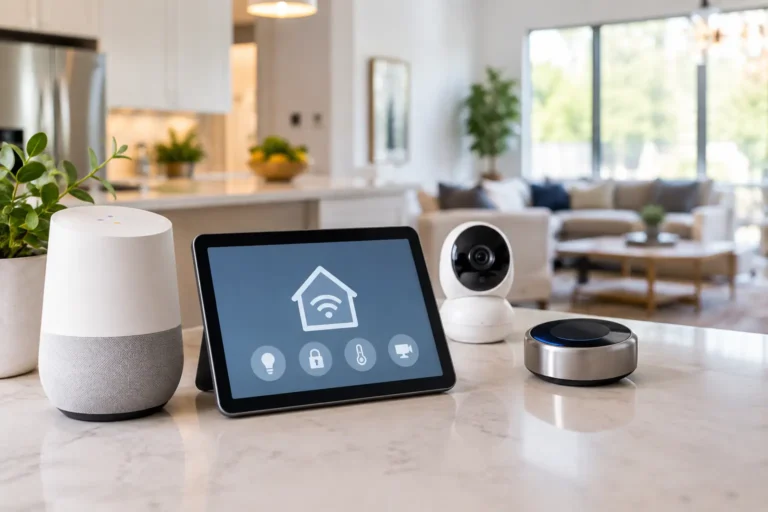
A beautifully renovated room can still feel dated if the lighting is hard to control, outlets are in the wrong places, or the thermostat cannot keep up with how your family lives. The best smart home upgrades are not gadgets added at the end of a project. They are practical features planned into the renovation, where wiring, placement, finishes, and daily routines can all work together.
For homeowners planning a kitchen remodel, bathroom renovation, basement finish, or larger home improvement project, smart features can make a meaningful difference in comfort, convenience, energy use, and peace of mind. The key is choosing technology that solves a real household need rather than filling the home with devices that may be ignored six months later.
Start Smart Home Upgrades Before Construction Begins
Smart devices are easiest to install when walls are open and electrical work is already part of the scope. During the planning stage, think through how each room is used at different times of day. Where do you charge phones? Do you come home through a dark entryway? Does the basement need different lighting for movie nights, work, and family gatherings? Would a leak in a second-floor bathroom cause serious damage before anyone noticed it?
These questions help determine which upgrades belong in the project. They also help avoid common frustrations, such as relying on battery-powered devices where a hardwired option would be more dependable or discovering too late that there is no outlet near a planned wall-mounted display.
A renovation contractor can coordinate the practical side of this work with the appropriate licensed trades. That includes locating outlets, planning switch boxes, accounting for electrical capacity, and making sure technology does not interfere with cabinetry, tile layouts, plumbing access, or finished walls. Good planning keeps the finished space clean and intentional.
Lighting Controls Make the Biggest Daily Difference
Lighting is often the most useful place to begin. Smart dimmers, timers, occupancy sensors, and app-controlled lighting can improve how a home feels without making it complicated to operate.
In a kitchen, dimmable layered lighting lets you brighten work areas for meal prep and soften the room for dinner or entertaining. Under-cabinet lighting can be scheduled for early mornings or serve as low-level evening illumination. A smart dimmer is usually more practical than a collection of smart bulbs because it controls the fixture from the wall switch, where everyone expects it to work.
Bathrooms are another strong fit. Motion-activated toe-kick or vanity lighting can provide a gentle path for nighttime visits without turning on bright overhead fixtures. In a primary bathroom, separate controls for vanity lights, shower lighting, and accent lighting give the room more flexibility. For a bathroom used by children or guests, simpler controls may be the better choice.
Basements benefit from lighting zones. A finished basement may contain a TV area, workspace, play area, and guest space in one floor plan. Separate dimmers and scenes allow each area to function properly without over-lighting the entire room. Hardwired controls are typically more reliable than depending on voice commands alone, especially when guests or family members prefer a traditional switch.
Choose Compatibility Over Novelty
Not every smart product works well with every platform. Before selecting switches, bulbs, speakers, locks, or thermostats, decide how much control you actually want. Some homeowners prefer a single app and simple automations. Others are happy using standard wall controls with a few scheduled settings in the background.
Avoid buying products solely because they are on sale or promise a long feature list. A smaller system made up of compatible, well-supported devices is easier to maintain and less likely to create confusion for the next homeowner.
Improve Comfort With Better Climate Control
A smart thermostat can make a home more comfortable when it is matched to the heating and cooling system. It can adjust temperatures around work schedules, reduce heating or cooling when the house is empty, and provide useful visibility into energy use. For many families, the biggest benefit is simple consistency: the house is comfortable when they wake up, return from work, or settle in for the evening.
However, thermostat upgrades are not one-size-fits-all. Older HVAC systems, multi-zone homes, and homes with uneven temperatures may need additional planning. A smart thermostat cannot fix poor insulation, undersized equipment, or airflow problems. During a larger renovation, it may be worth addressing drafts, ventilation, ductwork, and insulation at the same time, particularly in a basement or addition.
Smart room sensors can help in spaces that tend to run too warm or too cool, such as a sunny kitchen, an upstairs bedroom, or a finished basement. They work best when the heating and cooling system has enough capacity to respond. Otherwise, setting realistic expectations is important.
Protect Your Home From Water Damage
Water is one of the most expensive threats to a home, which makes leak detection one of the most practical smart home upgrades available. Small sensors placed near toilets, vanities, washing machines, water heaters, and utility sinks can send an alert when moisture is detected. More advanced systems can monitor water use and, in some cases, shut off the main supply when a significant leak occurs.
This is especially worth considering during a bathroom renovation or basement finishing project. Once tile, flooring, custom cabinetry, and drywall are complete, early detection becomes even more valuable. Sensors should remain accessible for battery replacement and testing, rather than being hidden behind fixed panels or inaccessible appliances.
A smart water monitor does not replace quality plumbing work, proper waterproofing, or a reliable sump pump where one is needed. It adds another layer of protection. That distinction matters when making renovation decisions: technology supports solid construction, but it should never be used as a substitute for it.
Build Security Into the Way You Enter and Use the Home
Smart locks, video doorbells, and exterior cameras can add convenience and reassurance, particularly for busy households, frequent travelers, or families managing deliveries. A smart lock can eliminate the need to hide spare keys and allow temporary codes for trusted visitors. Doorbell cameras can help homeowners check who is at the door before answering.
Placement matters. A camera that looks useful online may create glare, miss the walkway, or have a poor view after it is installed. During an exterior renovation, entry update, or garage project, it is a good time to consider power sources, cable routes, Wi-Fi coverage, and lighting around doors and pathways.
For interior security, prioritize privacy. Cameras generally do not belong in bedrooms or bathrooms, and any indoor monitoring should be discussed openly with everyone in the household. Smart security should make a home feel safer, not less comfortable.
Do Not Forget Wi-Fi and Charging
A smart home depends on a dependable network. If the Wi-Fi signal drops in the basement, garage, backyard, or far end of the house, connected devices will be frustrating no matter how well they are designed. Whole-home renovations are a sensible time to plan for network equipment, data wiring, and access points in locations that are practical but discreet.
Charging also deserves more attention than it usually gets. Consider outlets with USB charging where people naturally use devices, such as kitchen islands, home offices, bedside areas, and finished basement seating. In a kitchen, charging drawers can keep counters clearer, but they must be designed with safe ventilation and proper electrical installation.
It is also wise to add more standard outlets than you think you need. A renovated home should support everyday life without extension cords crossing floors or power strips crowding a counter.
Prioritize the Features You Will Actually Use
The most valuable smart upgrades are often the least flashy: a thermostat that keeps rooms comfortable, lighting that works for every activity, a leak sensor that catches trouble early, and outlets located where your family needs them. Start with the systems that improve safety, comfort, and daily routines. Add entertainment features, motorized shades, and more specialized automation only when they fit the budget and the way you live.
At HB Renovations, we believe the strongest renovation plans account for the details homeowners will notice long after the dust is gone. A thoughtful conversation before construction can ensure smart features support your home instead of complicating it. Plan for the life you want to live in the space, then choose the technology that makes that life easier.
